
Search
Did you mean: Gades?
Remove Ads
Advertisement
Search Results

Definition
Parthian Religion
Parthian religion might be best described with two words: inclusive and evolving. As Parthia's empire held within it a variety of cultures, the Parthians wisely left each to their own beliefs and traditions, like the Seleucid...

Definition
Mythology
Myths are a part of every culture in the world and are used to explain natural phenomena, where a people came from and how their civilization developed, and why things happen as they do. At their most basic level, myths comfort by...

Definition
Picts
The Picts were a people of northern Scotland who are defined as a "confederation of tribal units whose political motivations derived from a need to ally against common enemies" (McHardy, 176). They were not a single tribe, nor necessarily...

Definition
Enheduanna - The World's First Author Known by Name
The Akkadian poet Enheduanna (circa 2300 BCE) is the world's first author known by name and was the daughter of Sargon of Akkad (Sargon the Great, reign 2334-2279 BCE). Whether Enheduanna was, in fact...

Definition
Ninigi
Ninigi-no-Mikoto, or simply Ninigi, is the grandson of the supreme Shinto deity Amaterasu, the sun goddess. He is the son of Ama-no-Oshiho-mimi and, descending to earth as the first just ruler, he brought with him gifts from Amaterasu...

Definition
Roman Imperial Cult
The Roman imperial cult was the practice of venerating Roman emperors and their families as having divine attributes, honoring their contributions to the spread of Roman religion and culture. It was instituted by the first...

Article
Women in Ancient Egypt
Women in ancient Egypt were regarded as the equals of men in every aspect save that of occupation. The man was the head of the household and nation, but women ran the home and contributed to the stability of that nation as...

Article
Hesiod on the Birth of the Gods
The Greek poet Hesiod (c. 700 BCE) is most famous for his works Theogony and Works and Days. In this passage from Theogony, Hesiod relates the birth of the gods from cosmic Chaos and follows the lineage through the...
Article
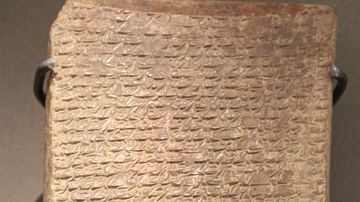
Ludlul-Bel-Nemeqi
The Ludlul-Bel-Nemeqi (c. 1700 BCE) is a Sumerian and later Babylonian poem on the theme of unjust suffering, which is thought to have influenced the biblical Book of Job. Also known as The Poem of the Righteous Sufferer, the...

Article
Epona
Epona was a Celtic goddess. Her name contains an allusion to the horse: in Celtic, "epos" means “horse” and the suffix “-ona” affixed simply means “on”. Epona is the patron goddess of mares and foals. The oldest information about the...
