
Search
Did you mean: Trireme?
Remove Ads
Advertisement
Search Results

Definition
Mausoleum at Halicarnassus
The Mausoleum at Halicarnassus (Bodrum, Turkey), was a massive tomb built for Mausolus, the ruler of Caria, c. 350 BCE. The marble structure was so immense and decorated with such an array of striking sculptures that it...
Definition
Bassae
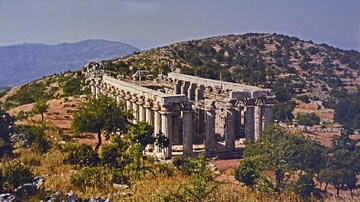
Bassae (Bassai), located in south-west Arcadia on the slopes of Mt. Kotilion, was an important temple site in the Archaic and Classical periods. Its large 5th-century BCE temple of Apollo, now covered with a permanent roof, is one of...

Article
Temple of Athena Nike
The Temple of Athena Nike, on the southwest bastion of the Acropolis, is smaller than the other buildings behind it but no less impressive. It was completed in 420 BCE during the restoration of Athens after the Persian invasion...
Article
Exploring Classical Pula, Croatia
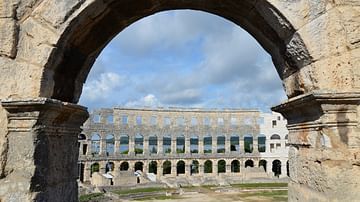
Located at the southern tip of the Istrian peninsula, Croatia’s westernmost outcrop, Pula is a town of extraordinary beauty with a 3000-year history. This important Istrian port boasts a rich and varied cultural...

Definition
Greek Architecture
Greek architecture is concerned with simplicity, proportion, perspective, and harmony in buildings. Greek architecture includes some of the finest and most distinctive buildings ever built. Examples of Greek architecture include...

Image
Hecate Fighting the Giant, Pergamon Altar
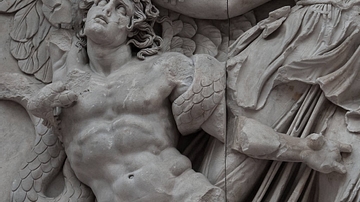
On the left side the goddess Hecate is depicted while fighting the giant Clytius (she fights in three incarnations with a torch, a sword, and a lance); Detail from the Pergamon Altar's frieze (The frieze depicts...
Image
Alkyoneus the Giant Killed by Athena
Detail from the Pergamon Altar's frieze (The frieze depicts the Gigantomachy); built in 2nd century BCE; Today in the Pergamon Museum in Berlin. The detail is part of a scene where Athena kills the giant by separating...
Image
Selene
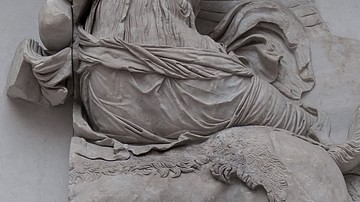
The moon goddess Selene is riding on her mule over one of the giants. Detail from the Pergamon Altar's frieze (The frieze depicts the Gigantomachy); built in 2nd century BCE; Today in the Pergamon Museum in Berlin.

Image
Gigantomachy, Treasury of the Siphians, Delphi
A detail from the north frieze of the Treasury of the Siphians at Delphi depicting the Olympian gods fighting the Giants (525 BCE), Delphi Archaeological Museum.

Definition
Artemis
Artemis was the Greek goddess of hunting, wild nature, and chastity. Daughter of Zeus and sister of Apollo, Artemis was a patron of girls and young women, and a protectress during childbirth. Artemis was widely worshipped but her most...
