
Search
Remove Ads
Advertisement
Search Results

Article
Trade in the Phoenician World
The Phoenicians, based on a narrow coastal strip of the Levant, put their excellent seafaring skills to good use and created a network of colonies and trade centres across the ancient Mediterranean. Their major trade...

Article
Indian Ocean Trade before the European Conquest
Finding a maritime route to the East and gaining access to the lucrative spice trade stood at the root of the European Age of Exploration. However, when Vasco da Gama rounded the Cape of Good Hope and...

Article
Drugs & Pharmaceuticals in Ancient Rome
Physicians in ancient Rome manufactured a wide variety of pharmaceuticals used to treat health concerns. Roman medicine was highly sophisticated, and Roman medical literature describes early antiseptics, narcotics...
Article
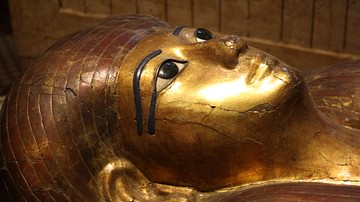
Herodotus on Burial in Egypt
Herodotus' section of his Histories on burial in ancient Egypt (Book II.85-90) is an accurate description of Egyptian mummification, but he purposefully omits the spiritual significance of embalming in keeping with his...

Article
Herod's Harbor
Herod's Harbor was a giant port built between 22 and 15 BCE by Herod the Great (r. 37-4 BCE), Rome's client king. Situated on the lower eastern Mediterranean coast north of Alexandria and south of Tyre, with Rome's largess and...

Article
Paul's Journeys and the Mediterranean Trade
Mediterranean trade increased exponentially at the turn of the first millennium. During Rome's zenith, goods of all sorts began to move in all directions. As a common traveler aboard merchant ships, Paul...

Article
How Queen Victoria Celebrated Christmas - The Festive Traditions in the Royal Household
The way Queen Victoria (reign 1837-1901) and her family celebrated their Christmases became familiar to the public over the years, thanks to the intense media coverage of...

Article
The Capture of the Treasure Ship Madre de Deus
The treasure ship Madre de Deus (aka Madre de Dios) was a Portuguese vessel carrying hugely valuable cargo from the East Indies which was attacked and captured by a fleet of English privateers in the Azores...

Article
Christmas Through the Ages
The Christmas holiday has gathered around it customs and traditions for over two millennia, some of which even pre-date the Christian festival itself. From gift-giving to the sumptuous spread of a Christmas dinner table...

Article
Parthia: Rome's Ablest Competitor
As a superpower in its own right and in competition with Rome, Parthia's empire - ruling from 247 BCE to 224 CE - stretched between the Mediterranean in the west to India in the east. Not only did the Parthians win...
