
Search
Remove Ads
Advertisement
Search Results
Image
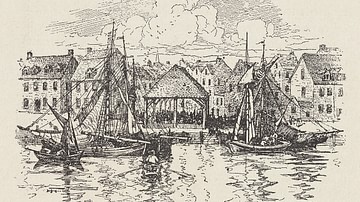
Slave Market in Wall Street, New York City, c. 1730
Slave market in Wall Street, New York City, c. 1730. Drawing published in A History of the American People (1902-1903), attributed to Harry Fenn.
New York Public Library Digital Collections.
Image
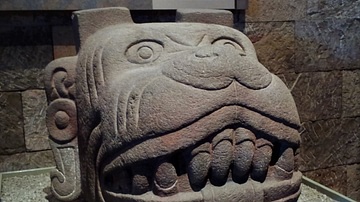
Sculpture of Xolotl, Mexico City
Head of the Aztec god Xolotl. Collection of National Anthropological Museum, Mexico City.

Image
The Arrival of George Washington at New York City, April 30, 1789
The Arrival of George Washington at New York City, April 30, 1789, oil on canvas by Arsène-Hippolyte Rivey, 1870.
New York Historical Society.
Image
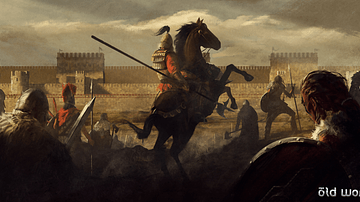
City Under Siege
Artist's impression of an army in front of a large city wall, most likely during Late Antiquity or the early Middle Ages. While this does not depict any specific event, the walls may represent the Theodosian Walls of Constantinople...
Image
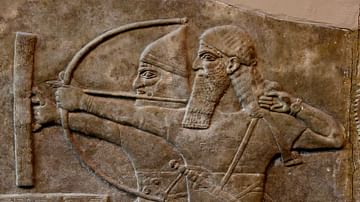
Crown Prince Shalmaneser III Attacks a City
Alabaster bas-relief depicting Shalmaneser III, Ashurnasirpal II’s son, attacking a city. Neo-Assyrian Period, 865-860 BCE. Detail of Panel 4 (bottom), Room B, the North-Palace Palace, Nimrud, modern-day...
Image
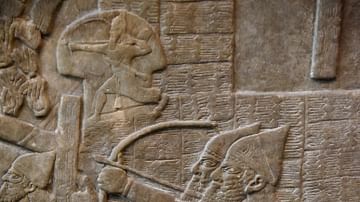
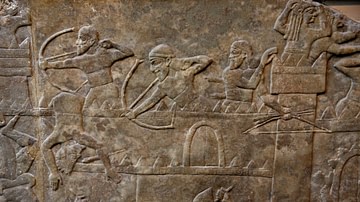
Assyrian Archers Attacking a City
Alabaster bas-relief depicting Assyrian archers attacking a city. Neo-Assyrian Period, 865-860 BCE. Detail of Panel 4 (bottom), Room B, the North-Palace Palace, Nimrud, modern-day Iraq. (The British Museum, London...
Image
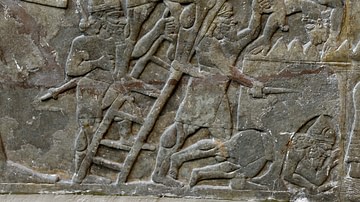
Assyrian Army Assaulting a City
Alabaster bas-relief showing a massive and progressive Assyrian assault on a city. Neo-Assyrian Period, 865-860 BCE. Detail of Panel 4 (bottom), Room B, the North-Palace Palace, Nimrud, modern-day Iraq. (The British...
Image
Assyrian Army Besieges a City
Alabaster bas-relief depicting an attack on a city by the Assyrian army. Detail of Panel 5 (bottom), Room B, the North-Palace Palace, Nimrud, modern-day Iraq, Neo-Assyrian Empire, 865-860 BCE. The British Museum, London...

Image
General Scott Enters Mexico City
US General Winfield Scott occupies Mexico City on 14 September 1847 at the end of the Mexican-American War (1846-1848). By Carl Nebel, 1851.
New York Public Library.
Image
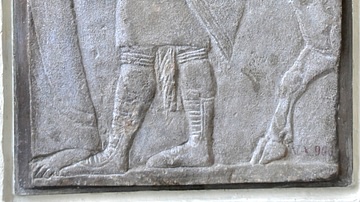
Capture of the Elamite city of Din-Sharri
This alabaster bas relief was part of a large wall relief that depicts the military campaign of Ashurbanipal against the Elamite city of Din-sharri. The relief shows an Assyrian soldier leading a captured woman...
