
Search
Remove Ads
Advertisement
Search Results

Image
First Continental Congress
The First Continental Congress, held by delegates from 12 of the 13 British colonies of North America from 5 September to 26 October 1774. The mural depicts Patrick Henry delivering a speech during the Congress at Carpenter's...

Definition
European Colonization of the Americas
The European colonization of the Americas was the process by which European settlers populated the regions of North, Central, South America, and the islands of the Caribbean. It is also recognized as the direct...

Article
The Athenian Calendar
The term "Athenian Calendar" (also called the "Attic Calendar") has become somewhat of a misnomer, since Ancient Athenians never really used just one method to reckon the passage of time. Athenians, especially from the 3rd...
Definition
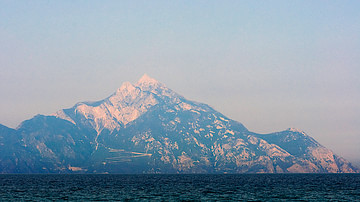
Mount Athos - The Byzantine Holy Mountain
Mount Athos, located on the Chalkidike peninsula near Thessalonica, Greece, is a holy site which first saw hermit monks living there in the 9th century CE. Regarded as one of the most important monastic sites...

Definition
Indian Massacre of 1622
The Indian Massacre of 1622 was an attack on the settlements of the Virginia Colony by the tribes of the Powhatan Confederacy under their leader Opchanacanough (l. 1554-1646) and his brother Opitchapam (d. c. 1630) resulting...

Definition
The Saxons
The Saxons were a Germanic people of the region north of the Elbe River stretching from Holstein (in modern-day Germany) to the North Sea. The Saxons who migrated to Britain in the 5th and 6th centuries CE along with the Angles, Frisians...

Definition
Sioux Warrior Rain-in-the-Face (Eastman's Biography)
Rain-in-the-Face (Ite Omagazu, l. c. 1835-1905) was a Lakota Sioux warrior and war chief during Red Cloud's War (1866-1868) and at the Battle of the Little Bighorn (1876), after which he became famous...

Definition
Sir Thomas More
Sir Thomas More (1478-1535 CE) was a lawyer, scholar, statesman, and Lord Chancellor to Henry VIII of England (r. 1509-1547 CE) who was executed in July 1535 CE for his refusal to endorse Henry's break of the Church in England...

Definition
Second Anglo-Sikh War
The Second Anglo-Sikh War (1848-9) once again saw the British East India Company defeat the Sikh Empire in northern India. The war, which started off as a rebellion against British colonial rule, included the high-casualty...

Definition
Plebeians
Plebeians were members of the plebs, the hereditary social class of commoners in ancient Rome. Their exclusion from political power by the patricians, who claimed to be the descendants of the first senators, led to Conflict of the...
