
Search
Remove Ads
Advertisement
Search Results

Definition
Andrea Palladio
Andrea Palladio (1508-1580 CE) was an Italian Renaissance architect most famous for the villas he designed in and around Vicenza and two large churches in Venice. Palladio blended elements of classical architecture, particularly...

Definition
Ovid
Publius Ovidius Naso, more commonly known to history as Ovid (43 BCE - 17 CE), was one of the most prolific writers of the early Roman Empire. His works of poetry, mostly written in the form of elegiac couplets, influenced many of the...

Definition
Roman Constitution
Roman constitution was an accumulation of laws, legal decisions, and ancient customs. While today 'constitution' usually refers to a single act of legislation, this was not the case in ancient Rome. Instead, Roman government...

Definition
Ostia
Ostia (or Ostia Antica) lies 15 km from the city of Rome for which it served as the city's principal port and harbour throughout antiquity. The name derives from 'os' or 'ostium' which means 'mouth' and refers to the city's location at...
Definition
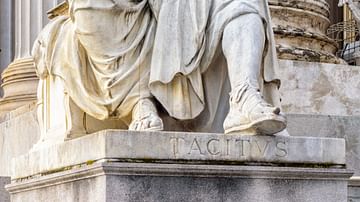
Tacitus
Publius Cornelius Tacitus (l. c. 56 - c. 118 CE) was a Roman historian, active throughout the reign of Trajan (r. 98-117 CE) and the early years of Hadrian (r. 117-138 CE). His best-known works are Histories and Annals, which cover the...

Definition
Odoacer
Odoacer (433-493 CE, reigned 476-493 CE) also known as Odovacar, Flavius Odoacer, and Flavius Odovacer, was the first king of Italy. His reign marked the end of the Roman Empire; he deposed the last emperor, Romulus Augustulus, on 4...

Article
Genocide in the Ancient World
Genocide is often viewed as a particular feature of our own current age. This perception largely stems from the terrible events which took place during World War Two in the 20th century CE in the parts of Europe occupied...
Article
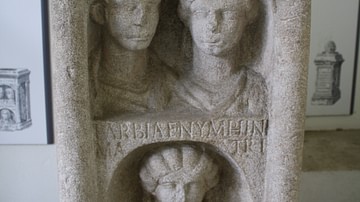
Ancient Roman Family Life
Whether there was a king, a consul, or an emperor that stood supreme over Rome and its territories, the one constant throughout Roman history was the family. Like many earlier societies, the family was the fundamental...
Article
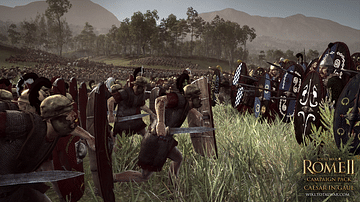
Battle of Telamon
Ever since the 4th century BCE, the Gallic tribes of northern Italy clashed with the expanding Roman Republic. In 225 BCE, the Boii forged alliances with fellow Gallic tribes of northern Italy and with tribes from across the...

Article
The Battle of Actium: Birth of an Empire
The battle of Cynoscephalae in 197 BCE concluded the Second Macedonian War (200-197 BCE) and consolidated Rome's power in the Mediterranean, finally resulting in Greece becoming a province of Rome in 146 BCE...
