
Search
Remove Ads
Advertisement
Search Results

Definition
Lycurgus
Lycurgus is considered the semi-mythical founder of classical Sparta and responsible for all of the city-state’s laws as well as its military and political institutions. He became better known to generations of Spartans as the lawgiver...

Definition
George Berkeley
George Berkeley (1685-1753) was an Anglo-Irish bishop and an empiricist and idealist philosopher. He infamously claimed that no matter exists outside of God and that things only exist outside of our minds and perceptions because...

Definition
Herodotus
Herodotus (l. c. 484 – 425/413 BCE) was a Greek historian famous for his work Histories. He was called The Father of History by the Roman writer Cicero, who admired him, but has also been rejected as The Father of Lies by critics...
Definition
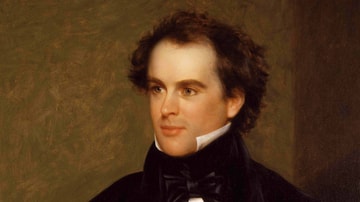
Nathaniel Hawthorne
Nathaniel Hawthorne (1804-1864) was an American author of novels and short stories, who produced some of the most memorable works of American literature: the novels The Scarlet Letter and The House of the Seven Gables as well...

Definition
Troy
Troy is the name of the Bronze Age city attacked in the Trojan War, a popular story in the mythology of ancient Greece, and the name given to the archaeological site in the north-west of Asia Minor (now Turkey) which has revealed a large...

Definition
Christianity
Christianity is the world's largest religion, with 2.8 billion adherents. It is categorized as one of the three Abrahamic or monotheistic religions of the Western tradition along with Judaism and Islam. 'Christian' is derived from...

Definition
Quran
The Quran (also written Qur’an or Koran), revealed in the 7th century, is the sacred book of Islam, following in the tradition of the Abrahamic faiths, with the Torah as the sacred book of Judaism and the New Testament as the sacred book...

Definition
Demeter
Demeter was one of the oldest gods in the ancient Greek pantheon. Demeter was a goddess of agriculture and guaranteed the fertility of the earth. She protected both farming and vegetation. The close connection with the earth was inherited...

Definition
Themistocles
Themistocles (c. 524 - c. 460 BCE) was an Athenian statesman and general (strategos) whose emphasis on naval power and military skills were instrumental during the Persian wars, victory in which ensured that Greece survived its greatest...

Definition
Zakutu
Zakutu (l. c. 728 - c. 668 BCE) was the Akkadian name of Naqi’a, a secondary wife of Sennacherib of Assyria (r. 705-681 BCE). Though she was not Sennacherib's queen, she bore him a son, Esarhaddon, who would succeed him. She may have...
