
Search
Remove Ads
Advertisement

 This answer was generated by
Search Results
Definition
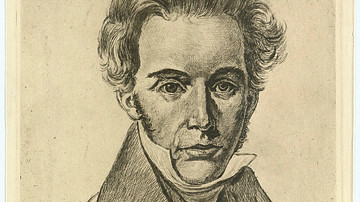
Søren Kierkegaard
Søren Kierkegaard (1813-1855) was a Danish philosopher and is considered to be the first existentialist, influencing such notable philosophers as Jean-Paul Sartre (1905-1980) and Martin Heidegger (1889-1976). His works are a...

Definition
Paul Gauguin
Eugène Henri Paul Gauguin (1848-1903) was a French neo-impressionist painter whose vivid paintings with their flat, bold colours and use of mystical and ambiguous symbols revolutionised art. Never quite gaining success in his own...

Definition
Edvard Grieg
Edvard Grieg (1843-1907) was a Norwegian composer known for his songs, piano music, and the Peer Gynt suites. The composer was famous in his own lifetime, touring extensively to play and conduct his own works across Europe. Grieg's...

Definition
Edda
Edda is a term used to describe two Icelandic manuscripts that were copied down and compiled in the 13th century CE. Together they are the main sources of Norse mythology and skaldic poetry that relate the religion, cosmogony, and history...

Definition
French Revolutionary Wars
The French Revolutionary Wars (1792-1802) were a series of conflicts that arose from the tensions surrounding the French Revolution (1789-1799). The wars were fought between Revolutionary France and several European powers...

Definition
War of the Second Coalition
The War of the Second Coalition (1798-1802), part of the broader French Revolutionary Wars, was the second attempt by an alliance of major European powers to defeat Revolutionary France. The Second Coalition, which included...
Definition
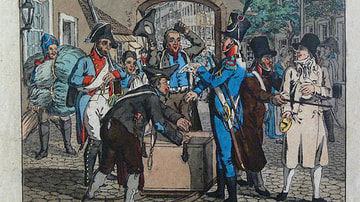
Continental System
The Continental System was a major blockade of British trade imposed by French Emperor Napoleon I from 21 November 1806 to 11 April 1814. It was designed to cripple the British economy, thereby forcing Britain out of the Napoleonic...
Definition
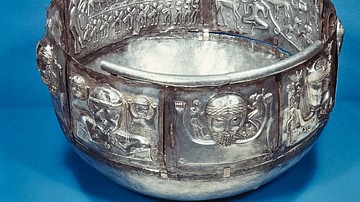
Gundestrup Cauldron
The Gundestrup Cauldron is a gilded silver bowl found in Gundestrup in Denmark in 1891 CE. It was likely made in the Balkans, perhaps in the 1st century BCE, and shows a clear influence from Celtic art and mythology, even if...

Definition
Tycho Brahe
Tycho Brahe (1546-1601) was a Danish nobleman who made the most significant contribution to our knowledge of astronomy before the telescope arrived. He discovered a supernova, observed the elliptical interplanetary orbit of a comet...

Interview
Interview with Greg Woolf
Join World History Encyclopedia as they talk to author and professor Greg Woolf all about his book Rome: An Empire's Story, Second Edition, published by Oxford University Press. Kelly (WHE): Do you want to just tell everyone...
