
Search
Remove Ads
Advertisement
Search Results

Article
The Bronze Bells of Ancient Korea
The metalworkers of ancient Korea were highly skilled artists and some of their finest surviving works are the large bronze bells cast for use in Buddhist temples and monasteries. Both the Unified Silla kingdom and...
Article
The Eastern Trade Network of Ancient Rome
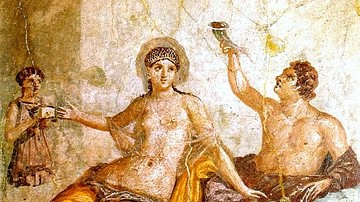
The life of wealthy Romans was filled with exotic luxuries such as cinnamon, myrrh, pepper, or silk acquired through long-distance international trade. Goods from the Far East arrived in Rome through two corridors...

Image
1,000 Characters of Happiness
The 1,000 Characters of Happiness are Chinese logographic images rendered in traditional caligraphy. They are on display near Mao's Garden inside the entrance to the Great Wall of China some three hours from the city...
Image
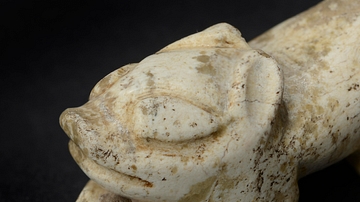
Chinese Nephrite Jade Dog Amulet
Headshot of dog amulet possibly from the period of the Liangzhu Culture in China (c. 3400-2250 BCE). This dog amulet measures 63.1 x 19.9 x 20.8 mm (2.4 x 0.78 x 0.81 inches). Jade dog amulets were often made and...

Image
Chinese woodblock print
Woodblock print in the shangtu xiawen format (illustration above, text below) from the 9th century CE, Tang Dynasty. The top part shows the seated Bodhisattva Avalokitesvara, flanked by two inscribed cartouches. The bottom...

Image
Chinese Tea Ceremony
The Tea Ceremony is an elaborate ritual of respect in which people take tea together. The person who prepares the tea honors her guests through her preparations and presentation, and the guests pay her respect by participating...

Image
Chinese Bodhisattva with Diadem
A bodhisattva with diadem from Tumshuq, Toqquz-sarai, Small Temple D (Xinjiang), China. 6th-7th century CE. (Musée Guimet, Paris)

Image
Chinese Lacquered Guardian Figure
A wood and lacquer guardian figure from the Eastern Zhou Dynasty, China. c. 4th century BCE. Height: 76.2 cm. (British Museum, London)
Image
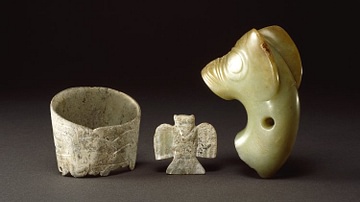
Chinese Jade Pig-Dragon, Owl & Hair Ornament
A jade hair ornament (?), owl figurine and pig-dragon. Hongshan Culture, c. 3,500 BCE. From Liaoning Province, China. (British Museum, London)

Image
Chinese Examination Cells
Cells used in the civil service examinations of imperial China. Students stayed three days in them taking the exam. South River School (Nanjiangxue), Nanjing, China.
