
Search
Remove Ads
Advertisement
Search Results

Definition
The Enlightenment
The Enlightenment (Age of Reason) was a revolution in thought in Europe and North America from the late 17th century to the late 18th century. The Enlightenment involved new approaches in philosophy, science, and politics. Above...
Definition
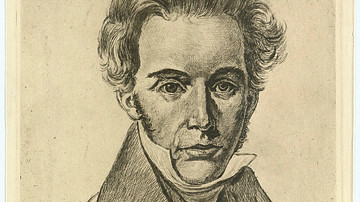
Søren Kierkegaard
Søren Kierkegaard (1813-1855) was a Danish philosopher and is considered to be the first existentialist, influencing such notable philosophers as Jean-Paul Sartre (1905-1980) and Martin Heidegger (1889-1976). His works are a...

Definition
Horemheb
Horemheb (reigned 1320-1292 BCE) was the last pharaoh of the 18th dynasty of Egypt. He is also known as Dejserkheprure and Horemhab. His name means, "Horus is in Festival" and he came from the lower classes of Egypt, worked himself...

Definition
Charles II of England
Charles II of England (r. 1660-1685) was the king of Scotland (1649-1685) before the Restoration in 1660 also made him king of England and Ireland. Charles was a charming and easygoing monarch who took a keen interest in sports...

Definition
Ashoka the Great
Ashoka the Great (r. 268-232 BCE) was the third king of the Mauryan Empire (322-185 BCE) best known for his renunciation of war, development of the concept of dhamma (pious social conduct), and promotion of Buddhism as well as...

Definition
Mali Empire
The Mali Empire (1240-1645) of West Africa was founded by Sundiata Keita (r. 1230-1255) following his victory over the kingdom of Sosso (c. 1180-1235). Sundiata's centralised government, diplomacy and well-trained army permitted a...

Article
Gender & Identity in Mulan: Text & Commentary
The legend of Mulan, now world-famous thanks to the Disney films of 1998 and 2020, is the story of a young girl who disguises herself as a man to take her aged father's place as a conscript in the army...

Article
Christianity in Japan
Christianity arrived in Japan in 1549 when Jesuits first set foot in Kagoshima. Initial attempts to spread the religion were met with confusion; however, through employing various methods, they began to see success. However...
Article
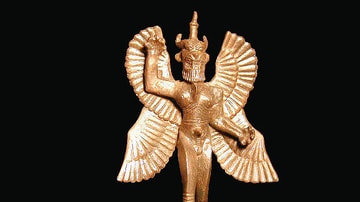
Twelve Menacing & Protective Mythological Figures
The term mythology comes from the Greek words mythos (“story of the people”) and logos (“word”) and so is defined as the spoken (later written) story of a culture. Modern scholars have divided myths...

Article
Ancient Persian Gods, Heroes, and Creatures - The Complete List
The term 'mythology' comes from the Greek mythos (story-of-the-people) and logos (word or speech), meaning the spoken story of a people. Every civilization of the ancient world developed a...
