
Search
Search Results

Definition
Kofun
Kofun (old tumuli) are large artificial mound tombs built in ancient Japan for the ruling elite between the 3rd and 7th century CE. Many measure several hundred metres across, are surrounded by a moat, and, besides containing valuable bronze...

Video
Brú na Bóinne, Ireland: Prehistoric Burial Mounds
One hour north of Dublin in the Boyne River valley, evocative 5000-year-old (older than the pyramids!) burial mounds sprout from the lush Irish countryside. The best place for a glimpse of prehistoric Ireland is Brú na Bóinne, an archaeological...

Video
Illinois Adventure #1308
The remains of the most sophisticated prehistoric native civilization north of Mexico are preserved at Cahokia Mounds State Historic Site. Within the 2,200-acre tract, located a few miles west of Collinsville, Illinois, lie the archaeological...
Definition
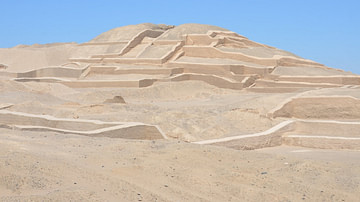
Cahuachi
Cahuachi, located on the southern coast of Peru, was the most important sacred site of the Nazca civilization. The Nazca flourished between 200 BCE and 600 CE, and Cahuachi covers a similar time period. The site, which was used for harvest...
Article
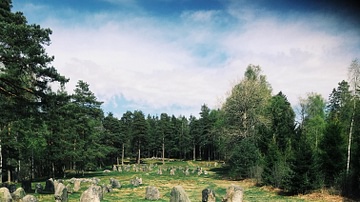
Exploring Norways' Forgotten Stone Circles & Petroglyphs
Right outside the cities of Fredrikstad and Sarpsborg in South-East Norway, there are two archaeological, intriguing and beautiful sites, the Hunnfelt, a monument consisting of several stone circles and burial sites, and the Begbyfelt, a...

3D Image
LiDAR Data of Cahokia Mounds
Cahokia Mounds, some 13 km north-east of St Louis, Missouri, is the largest pre-Columbian settlement north of Mexico. It was occupied primarily during the Mississippian period (800–1400), when it covered nearly 1,600 ha and included some...

Article
The Megalithic Funerary Art of San Agustín
Beginning approximately 2000 years ago, in a rugged stretch of southwestern Colombia where the Andes split into multiple ranges and the mighty Magdalena River is born, a people created a collection of magnificent ritual and burial monuments...

Definition
Native Peoples of North America
The Native Peoples of North America (also known as American Indians, Native Americans, Indigenous Americans, and First Americans) are the original inhabitants of North America believed to have migrated into the region between 40,000-14,000...

Definition
Civilization - From Nomadic Life to the Farm and City
Civilization (from the Latin civis=citizen and civitas=city) is a term applied to any society which has developed a writing system, government, production of surplus food, division of labor, and urbanization. The term is difficult to define...
Definition
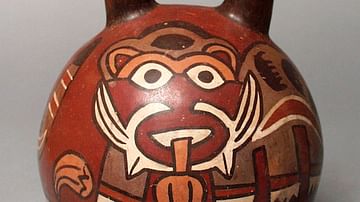
Nazca Civilization
The Nazca civilization flourished on the southern coast of Peru between 200 BCE and 600 CE. They settled in the Nazca and other surrounding valleys with their principal religious and urban sites being Cahuachi and Ventilla, respectively...
