
Search
Remove Ads
Advertisement
Search Results

Definition
Honoré-Gabriel Riqueti, comte de Mirabeau
Honoré-Gabriel Riqueti, comte de Mirabeau (l. 1749-1791) was a French orator and nobleman who rose to prominence as a leader during the early stages of the French Revolution (1789-1799). From the disgraced...

Definition
London Blitz
The London Blitz was the sustained bombing of Britain's capital by the German and Italian air forces from September 1940 to May 1941 during the Second World War (1939-45). The objective was to bomb Britain into submission, but despite...
Definition
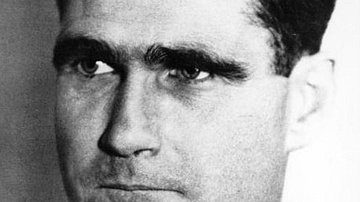
Rudolf Hess
Rudolf Hess (1894-1987) was deputy leader of the German Nazi Party and a key figure in the fascist regime of Adolf Hitler (1889-1945) until his bizarre decision in 1941 to fly to Scotland. Hess believed he could persuade Britain to...

Definition
North American P-51 Mustang - The Fighter that Changed Aerial Warfare
The North American P-51 Mustang was a long-range fighter aircraft used by the air forces of the United States and Great Britain during the Second World War (1939-45). Widely considered...

Definition
Operation Gomorrah - The 1943 Bombing of Hamburg
Operation Gomorrah (aka the Battle of Hamburg or Hamburg Air Offensive) was a sustained area bombing campaign of the German port of Hamburg in four night attacks by the Royal Air Force and two daytime...

Definition
Nuremberg Rally
The Nuremberg Rally, or the Reich Party Congress, was an annual event held from 1927 to 1938 in Nürnberg, Germany. Organised on a massive scale by the National Socialist Party (Nazi), these operations in pomp, ceremony, and propaganda...

Article
Women Scientists in the Scientific Revolution
Women scientists during the Scientific Revolution (1500-1700) were few in number because male-dominated educational institutions, as well as scientific societies and academies, barred women entry, meaning...

Article
The Home Fronts in World War I - The Effects of Total War on Civilians
The First World War (1914-18) saw fighting on an unprecedented scale but also involved civilians as never before. For the first time, people hundreds of miles from the fighting front...

Article
Battle of Jena-Auerstedt
The twin battles of Jena and Auerstedt, both fought on 14 October 1806, marked a major turning point in the Napoleonic Wars (1803-1815). It saw the French Grande Armée, led by Emperor Napoleon I (r. 1804-1814; 1815) soundly...

Article
The Causes of WWI
The origins of the First World War (1914-18) are many and varied, with some even dating back several decades, but a political assassination in the Balkans in the summer of 1914 was the spark that blew up Europe's political powder...
