
Search
Did you mean: The Dagda?
Remove Ads
Advertisement
Search Results

Definition
Nikephoros I
Nikephoros I ruled as emperor of the Byzantine Empire from 802 to 811 CE. A former finance minister who did much to improve the state economy, Nikephoros was not particularly popular with the empire's overtaxed peasants and overregulated...
Definition
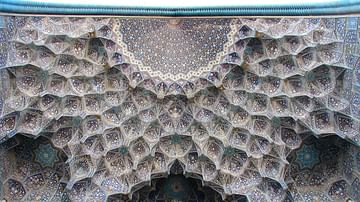
Muqarnas
Muqarnas is a three-dimensional architectural decorative element that flourished in its most complete form mainly during the Islamic period and is most pervasively used in domes and semi-domes. One of the key features of this mesmerizing...

Definition
Dur-Sharrukin
Dur-Sharrukin (modern Khorsabad, Iraq) was a city built by Sargon II of Assyria (r. 722-705 BCE) as his new capital between 717-706 BCE. The name means Fortress of Sargon and the building project became the king's near obsession...

Definition
Evliya Çelebi - The Most Famous Ottoman Traveler
Evliya Çelebi (1611 -1682/85) is the most famous Ottoman Turkish traveler and explorer. He is well-known for his ten-volume travelogue, the Seyahatnâme ('Book of Travels'), a monumental narrative of his...

Definition
Parthian Religion
Parthian religion might be best described with two words: inclusive and evolving. As Parthia's empire held within it a variety of cultures, the Parthians wisely left each to their own beliefs and traditions, like the Seleucid...

Definition
Constantine V
Constantine V, also known as Constantine the Dung-named by his enemies, was emperor of the Byzantine empire from 741 to 775 CE. He enjoyed military successes in the Middle East and Balkans but his reign is chiefly remembered for...

Definition
Nikephoros II Phokas
Nikephoros II Phokas was Byzantine emperor from 963 to 969 CE. Known as “White Death of the Saracens,” Nikephoros was a fearsome commander who conquered Crete, Cilicia, and much of Syria. While he is known as a great military...
Image
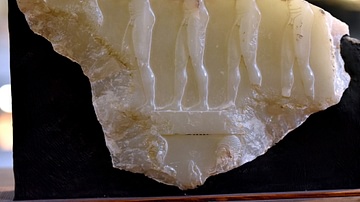
Naram-Sin Victory Stele from Wasit
This alabaster stele (with different registers) was fragmented when originally found and only three fragments have survived; two are in the Iraq Museum in Baghdad and one is in the Museum of Fine Arts, Boston, USA...

Image
The Bassetki Statue at the Iraq Museum
This statue weighs about 150 Kg and is made of pure copper, a more difficult casting that requires a much higher temperature than that of bronze. The diameter of the rounded pedestal is about 67 cm and the height...
Image
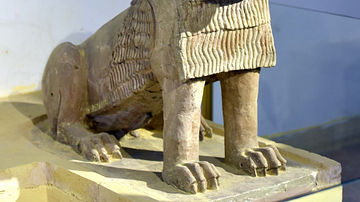
Terracotta Lion from Tell Harmal
This terracotta lion was found at the entrance to the Dagan Temple at Tell Harmal (ancient Shaduppum), in the eastern outskirt of Baghdad. The temple was dedicated to Nisaba (goddess of the grain and writing) and...
