
Search
Did you mean: Ashurnasirpal II?
Remove Ads
Advertisement
Search Results

Image
The Epic of Gilgamesh in 12 Pictures
The Epic of Gilgamesh is the oldest surviving work of epic literature, originating in Mesopotamia with its earliest Sumerian poems composed around c. 2100 BCE, during the period of early city-states in southern Mesopotamia. Centered on Gilgamesh...

Image
Neo-Assyrian Empire c. 912-612 BCE
Map of the Neo-Assyrian Empire c. 912-612 BCE, showing expansion by Shalmeneser III (r. c. 859-824 BCE), Tiglath-Pileser III (r. c. 745-727 BCE), Sargon II (r. c. 722-705 BCE), Sennacherib (r. c. 705-681 BCE), and Ashurbanipal (r. c. 688-627...

Image
Assyrian Soldiers Holding Decapitated Heads of Nubian Soldiers
Detail of a large gypsum wall panel, depicting the Assyrian attack on a fortress at the Egyptian city of Memphis in 667 BCE, Panel 17, Room M of the North Palace at Nineveh, Northern Mesopotamia, modern-day Iraq, Neo-Assyrian Empire, 645-635...

Image
Destruction of Susa
Ashurbanipal's campaign against Susa is triumphantly recorded in this relief showing the sack of Susa in 647 BC. Here, flames rise from the city as Assyrian soldiers topple it with pickaxes and crowbars and carry off the spoils.
Image
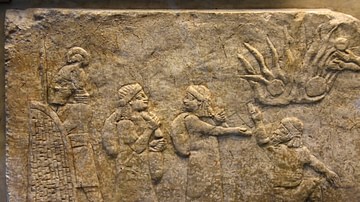
Assyrian Relief Showing Babylonian Prisoners
Assyrian alabaster panel showing Babylonian prisoners in a camp, from the North Palace at Nineveh, Northern Mesopotamia, modern-day Iraq, Neo-Assyrian Empire, reign of Ashurbanipal II, 668-630 BCE. To the left, an Assyrian soldier stands...

Image
Assyrian Soldiers Engaging with Nubian Soldiers at Memphis
Detail of a large gypsum wall panel showing the Assyrian army attacking the Egyptian city of Memphis and commemorating the final victory of the Assyrian king Ashurbanipal II over the Egyptian king Taharqa in 667 BCE. Panel 17, Room M of the...
Image
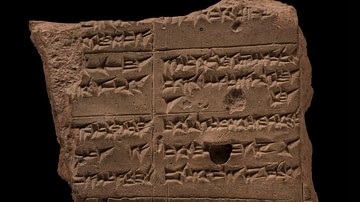
Mesopotamian Tablet with Proverbs
Fragment of a Neo-Assyrian clay tablet, with 8 lines of bilingual text, including proverbs and riddles, from the Library of Ashurbanipal, Kouyunjik, Iraq.
The British Museum, London.
Image
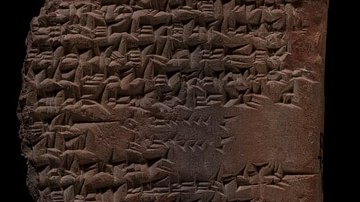
Tablet Describing the Akitu Festival
Fragment of a Babylonian clay tablet, with 16 lines of inscription describing rites in Babylon relating to the Akitu festival. Fragment of the right half, copy of a text containing regulations for making offerings. From the Library of Ashurbanipal...
Image
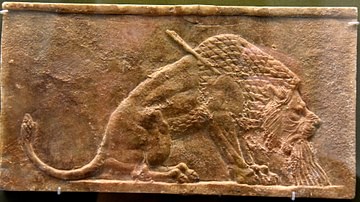
Assyrian Dying Lion
Detail of a much larger gypsum wall relief showing the climax of a royal lion hunt. The lion is shown in his final death throes, blood pouring from his mouth. From the North Palace of Ashurbanipal II at Nineveh, Mesopotamia, modern-day Iraq...
Image
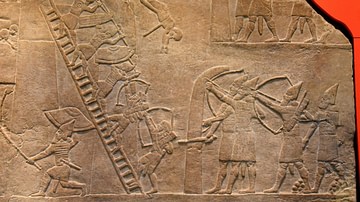
Assyrian Archers Attacking an Egyptian Fortress at Memphis
Detail of a large gypsum wall panel showing the Assyrian army attacking the Egyptian city of Memphis and commemorating the final victory of the Assyrian king Ashurbanipal II over the Egyptian king Taharqa in 667 BCE. Panel 17, Room M of the...
