
Search
Remove Ads
Advertisement
Search Results

Definition
Code of Hammurabi - The Most Influential Law Code of the Ancient World
The Code of Hammurabi was a set of 282 laws inscribed in stone by the Babylonian king Hammurabi (reign 1792-1750 BCE), who conquered and then ruled ancient Mesopotamia. Although his law...
Definition
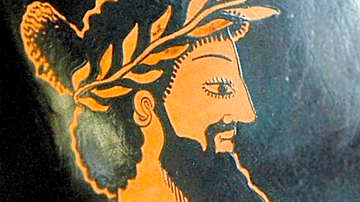
Croesus
Croesus (r. 560-546 BCE) was the King of Lydia, a region in western Asia Minor (modern-day Turkey) and was so wealthy that the expression "as rich as Croesus" originates in reference to him. Best known for his wealth, he is also famous...

Definition
Sardis
Sardis (near modern-day Sart, Turkey) was the capital of the ancient Kingdom of Lydia founded (according to Herodotus) by the Heracleidae, the Heraclid Dynasty descended from the hero Heracles (Hercules). The city was famous in antiquity...

Definition
Prambanan
Prambanan (Javanese: Rara Jonggrang) is a Hindu temple complex dating from the 9th century CE located near Bokoharjo, on the island of Java in Indonesia. Prambanan is the largest Hindu temple in Indonesia and one of the largest Hindu...

Definition
Akkad and the Akkadian Empire - The First Multinational Empire in the World
The city of Akkad was the seat of the Akkadian Empire (2350/2334-2154 BCE), the first multinational political entity in the world, founded by Sargon the Great, who unified Mesopotamia...
Definition
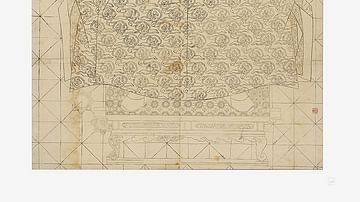
Taejong of Joseon
King Taejong of Joseon (r. 1400-1418) was the third ruler of the Joseon Dynasty in Korea. Taejong was a driving force behind consolidating and strengthening the king’s power, and while he was an effective ruler, his violent means...

Definition
Antoninus Pius
Antoninus Pius was Roman emperor from 138 to 161 CE. When Roman emperor Hadrian (r. 117-138 CE) died on July 10, 138 CE, he left, as did his predecessors, an adopted son as his successor, Antoninus Pius. Antoninus - whose last...

Definition
Roman Architecture
Roman architecture continued the legacy left by Greek architects and the established architectural orders, especially the Corinthian. The Romans were also innovators and they combined new construction techniques and materials...

Definition
Roman Philosophy
Roman philosophy played a significant role in the growth and development of Western thought. While not involved directly in the development of original philosophical thought, Rome made significant contributions in two ways: by...

Definition
Roman Baths
Roman baths were designed for bathing and relaxing and were a common feature of cities throughout the Roman empire. Baths included a wide diversity of rooms with different temperatures, as well as swimming pools and places to read...
