
Search
Remove Ads
Advertisement
Search Results
Article
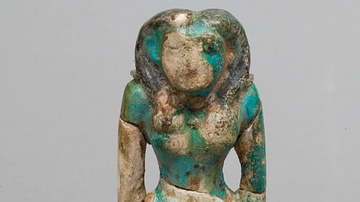
Tattoos in Ancient Egypt
Tattoos are an ancient form of art appearing in various cultures throughout history. One of the earliest (and possibly the oldest) pattern of tattoos in the world was discovered on the frozen remains of the man known as...

Definition
Ancient Chinese Calligraphy
Calligraphy established itself as the most important ancient Chinese art form alongside painting, first coming to the fore during the Han dynasty (206 BCE - 220 CE). All educated men and some court women were expected...
Definition
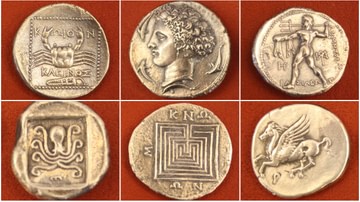
Ancient Greek Coinage
The coinage of ancient Greece has given us some of the most recognisable images from antiquity as they were stamped with designs to proudly declare the identity of the city which minted them and guarantee their value. One...

Definition
Roman Baths
Roman baths were designed for bathing and relaxing and were a common feature of cities throughout the Roman empire. Baths included a wide diversity of rooms with different temperatures, as well as swimming pools and places to read...

Definition
Twelve Tables
The Twelve Tables (aka Law of the Twelve Tables) was a set of laws inscribed on 12 bronze tablets created in ancient Rome in 451 and 450 BCE. They were the beginning of a new approach to laws which were now passed by government...

Collection
Between Alexander & Rome: The Hellenistic Period
The Hellenistic Period refers to the time between the death of Alexander the Great (323 BCE) and the rise of the Roman Empire (32 BCE) in which Greek culture spread throughout the Mediterranean and Near...

Image
Rome: Strategy of Empire
Rome: Strategy of Empire by James Lacey.

Video
Comparing Two Ancient Civilisations: Ancient Egypt vs. Mesopotamia
In this video, we are comparing Ancient Egypt vs. Mesopotamia in all sorts of different aspects. We will be looking at the similarities and differences between the geography of the two regions...
Image
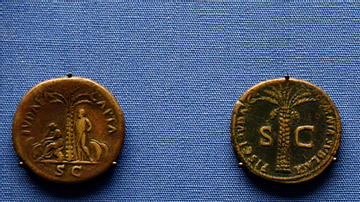
Roman Coins Referring to Judaea, Minted at Rome
Emperor Vespasian (r. 69-79 CE) issued a large series of coins commemorating the defeat of the First Jewish Revolt (66-70 CE), and Nerva (r. 96-98 CE) made coins to mark the end of abuses in the collection...

Image
Detail, Arch of Janus, Rome
A detail of the carved niches on the Arch of Janus which stood in the forum Boarium of Rome and was constructed in the 4th century CE most probably to act as a boundary marker.
