
Search
Remove Ads
Advertisement
Search Results

Article
Fortifications in Ancient Chinese Warfare
While ancient Chinese warfare was often characterised by large armies in pitched battles, siege warfare and the sacking of cities were also regular features. Huge earth walls with towers and encircling ditches...

Article
Trade in Ancient Celtic Europe
Trade in raw materials and manufactured goods in ancient Celtic Europe was vibrant and far-reaching, particularly regarding the centre of the continent where there was a hub of well-established trade routes. As the...

Article
Chariots in Ancient Indian Warfare
The chariot was the elite arm of ancient Indian armies in the Vedic (1500 BCE – 1000 BCE) and Epic periods (described by the Ramayana and the Mahabharata, 1000-600 BCE) because of the advantages it conferred and...

Definition
Clava Cairns - Monuments to Memory and More
Clava Cairns is an early Bronze Age site in Scotland, located east of the city of Inverness, consisting of three well-preserved cairns (two of which are passage graves) and a number of free-standing stones...

Article
The Fullers of Ancient Rome
The fullers of ancient Rome were launderers who washed the clothes of the city and also finished processing fabric later made into clothing, blankets, or other necessary items. They were looked down upon for their use...

Definition
Bantu Migration
The Bantu migration from their origins in southern West Africa saw a gradual population movement sweep through the central, eastern, and southern parts of the continent starting in the mid-2nd millennium BCE and finally ending...

Article
The Bronze Bells of Ancient Korea
The metalworkers of ancient Korea were highly skilled artists and some of their finest surviving works are the large bronze bells cast for use in Buddhist temples and monasteries. Both the Unified Silla kingdom and...
Article
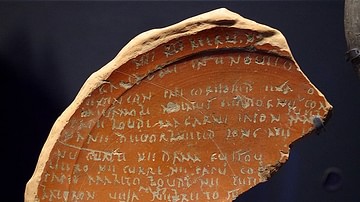
A Linguistical Analysis of Ancient Celtic Languages
The Celtic languages form a branch of the Indo-European (IE) language family. They derive from Proto-Celtic and are divided into Continental Celtic languages (Lepontic, Gaulish, Galatian, Noric, Celtiberian...

Definition
Estado da India
The Estado da India (1505-1961) was the name the Portuguese gave to that part of their empire which stretched from India to East Asia. However, in its widest sense, the name includes all Portuguese colonies east of the Cape of...

Article
Most Popular Gods & Goddesses of Ancient China
There were over 200 gods and goddesses worshipped throughout ancient China, but if one were to count every deity or spirit, the number would be over 1,000. Each town, village, city, field, farm, and sometimes...
