
Search
Remove Ads
Advertisement
Search Results

Definition
Jeanne d'Albret
Jeanne d’Albret (Joan III of Navarre, l. 1528-1572) was Queen of Navarre, daughter of Marguerite de Navarre (l. 1492-1549) and niece of King Francois I (Francis I of France, r. 1515-1547). She is best known for leading the Huguenots...

Definition
Johann Eck
Johann Eck (l. 1486-1543) was a Catholic theologian and writer best known for his disputations with Martin Luther (l. 1483-1546) beginning in 1517 and continuing until his death in 1543. Eck maintained the position that, if anyone...

Definition
Glorious Revolution
The Glorious Revolution of November 1688 saw Protestant William of Orange (l. 1650-1702) invade England and take the throne of Catholic James II of England (r. 1685-1688). There were no battles, and William was invited by Parliament...
Definition
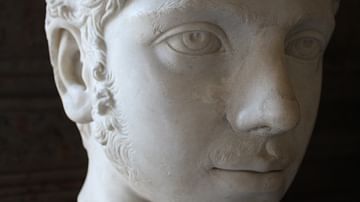
Elagabalus
Elgabalus was Roman emperor from 218 to 222 CE. Having failed to keep many of his promises to the army, Roman Emperor Macrinus (217 – 218 CE) was becoming increasingly unpopular, and it would only take a little lie from a young boy's...

Definition
Ancient Greek Religion
In the ancient Greek world, religion was personal, direct, and present in all areas of life. With formal rituals which included animal sacrifices and libations, myths to explain the origins of mankind and give the gods a...
Definition
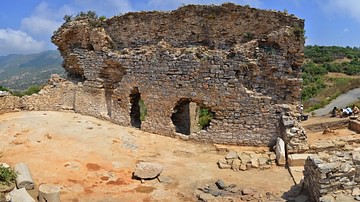
Antiochia ad Cragum
Antiochia ad Cragum (“Antioch on the Cliffs” or “Antioch at Cragus”) was a Hellenistic Roman city located in Cilicia Trachea (“Rough Cilicia”, also known as Cilicia Aspera and Cilicia Secunda) on the southern coast of modern-day...
Definition
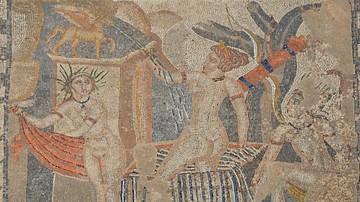
Diana
Diana was the goddess of childbirth, the fertility goddess, the goddess of the moon as well as the patron goddess of wild beasts in Roman mythology. However, she is best known as the goddess of the hunt, with her sacred animal being the...

Definition
Greek Mythology
Greek mythology was used as a means to explain the environment in which humankind lived, the natural phenomena they witnessed and the passing of time through the days, months, and seasons. Greek myths were also intricately connected...
Definition
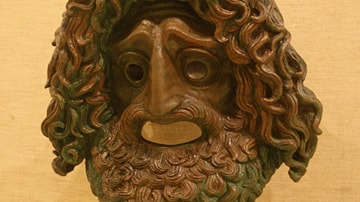
Ancient Greek Tragedy
Greek tragedy was a popular and influential form of drama performed in theatres across ancient Greece from the late 6th century BCE. The most famous playwrights of the genre were Aeschylus, Sophocles, and Euripides and many...
Definition
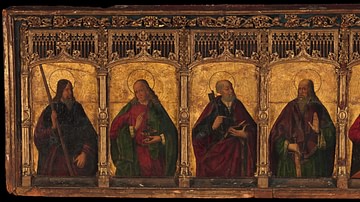
Acts of the Apostles
The Acts of the Apostles is the story of how the movement that became Christianity began in Jerusalem and spread throughout the Eastern Mediterranean cities of the Roman Empire. It was written by the same author as the third...
