
Search
Remove Ads
Advertisement
Search Results

Definition
Denisovan
The Denisovans are an extinct group of fossil humans who, along with their sister group the Neanderthals, also share an ancestor with Homo sapiens. Thus far, they are known only from Denisova Cave in the Altai Mountains in Siberia...
Definition
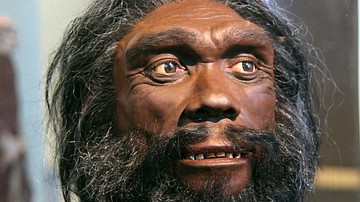
Homo Heidelbergensis
Homo heidelbergensis is an extinct species of human that is identified in both Africa and western Eurasia from roughly 700,000 years ago onwards until around 200,000 years ago – fitting snugly within the Middle Pleistocene...

Image
Twelve Spices That Changed the World - Trade, Empire, and the Global Age of Spices, 1450–1650
Between c. 1450 and 1650, demand for spices and other high-value plant commodities became an important catalyst for European maritime expansion. Pepper, cinnamon, cloves...

Definition
Greek Archaic Period
The Greek Archaic Period (c. 800-479 BCE) started from what can only be termed uncertainty, and ended with the Persians being ejected from Greece for good after the battles of Plataea and Mykale in 479 BCE. The Archaic Period...
Article
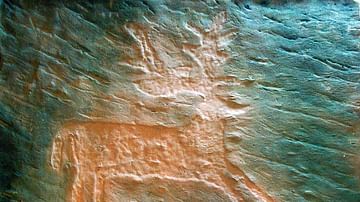
Rock Drawings of Valcamonica
The rock drawings of Valcamonica are prehistoric petroglyphs carved in the glacier-polished, grey-purple Permian sandstone of the Camonica valley that extends for 90 km in the Italian provinces of Brescia and Bergamo...

Image
Map of Spanish Conquest in Northern South America - Andes, Amazon & Caribbean Expeditions, 1499–1561
Spain’s rapid expansion into South America followed the consolidation of its Caribbean footholds by 1512, marking a decisive shift from exploration to imperial...

Image
Map of the Four Voyages of Christopher Columbus, 1492–1504 - Routes, Landfalls & Colonial Expansion in the Americas
Christopher Columbus (c. 1451–1506) led four transatlantic expeditions between 1492 and 1504 under the patronage of Isabella I of Castile and Ferdinand...

Definition
Norse Mythology
Norse mythology refers to the Scandinavian mythological framework that was upheld during and around the time of the Viking Age (c. 790- c. 1100 CE). Complete with a creation myth that has the first gods slaying a giant and turning...
Definition
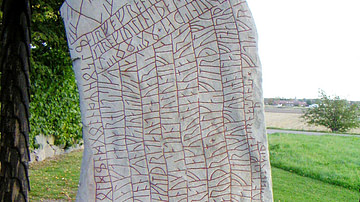
Runes
Runes are letters in the runic alphabets of Germanic-speaking peoples, written and read most prominently from at least c. 160 CE onwards in Scandinavia in the Elder Futhark script (until c. 700 CE) and the Younger Futhark - which illuminated...

Definition
Odin
Odin (Old Norse: Óðinn) is the main god in Norse mythology. Described as an immensely wise, one-eyed old man, Odin has by far the most varied characteristics of any of the gods and is not only the deity to call upon when war was being...
