
Search
Remove Ads
Advertisement
Search Results
Definition
Pulque
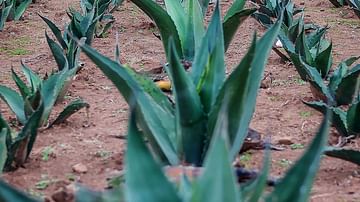
Pulque is an alcoholic drink which was first drunk by the Maya, Aztecs, Huastecs and other cultures in ancient Mesoamerica. Similar to beer, it is made from the fermented juice or sap of the maguey plant (Agave americana). In the Aztec language...

Definition
Chaco Canyon
Chaco Canyon was the center of a pre-Columbian civilization flourishing in the San Juan Basin of the American Southwest from the 9th to the 12th century CE. Chacoan civilization represents a singular period in the history of an ancient people...

Collection
The Fall of Civilizations
It seems that civilizations inevitably rise and fall no matter how big or small, and in this collection, we look at some of the most famous, spectacular, and mysterious collapses of cultures from the Romans to the Maya. War, famine, climate...

Definition
Tulum
Tulum, on the east coast of the Yucatan peninsula in southern Mexico, was an important Mesoamerican centre which displayed both Maya and Toltec influence. Tulum was a major trading and religious centre between the 11th and 16th centuries...

Definition
Wall
The English word 'wall' is derived from the Latin, vallus meaning 'a stake' or 'post' and designated the wood-stake and earth palisade which formed the outer edge of a fortification. The palisades were in use early on and are mentioned by...

Video
Archaeological Monuments Zone of Xochicalco (UNESCO/NHK)
Xochicalco is an exceptionally well-preserved example of a fortified political, religious and commercial centre from the troubled period of 650—900 that followed the break-up of the great Mesoamerican states such as Teotihuacan, Monte Albán...

Image Gallery
A Gallery of Maya Cities
The Maya Civilization flourished between 250-950 although it drew upon earlier civilizations such as that of the Olmecs (1500 - 200 BCE) and Zapotec (600 BCE - 800 CE) and lasted through the Post-Classic Period of 950-1524. The great cities...

Definition
Mesopotamian Art and Architecture - The Birth of Art and Architecture in the Ancient World
Ancient Mesopotamian art and architectural works are among the oldest in the world, dating back over 7,000 years. The works first appear in northern Mesopotamia prior to the Ubaid period (circa 6500-4000 BCE) and then developed in the south...

Image
Yaxchilan, Structure 33
Structure 33 at the Maya site of Yaxchilan, Mexico. The building has the typical ornate roof comb of Petén architecture and was built c. 750 CE.

Interview
Interview: Super/Natural: Textiles of the Andes
Over the course of several millennia, textiles were the primary form of aesthetic expression and communication for the diverse cultures that developed throughout the desert coasts and mountain highlands of the Andean region. Worn as garments...
