
Search
Remove Ads
Advertisement
Search Results

Article
Global Trade in the 13th Century
In the 13th century, astonishing quantities of spices and silk passed from the Far East to Europe. Exact amounts are not known, but spice popularity in both cuisine and medicine reached its historical peak during the Middle Ages in Europe...

Definition
Ancient Celts
The ancient Celts were various tribal groups living in parts of western and central Europe in the Late Bronze Age and through the Iron Age (c. 700 BCE to c. 400 CE). Given the name Celts by ancient writers, these tribes and their culture...
Article
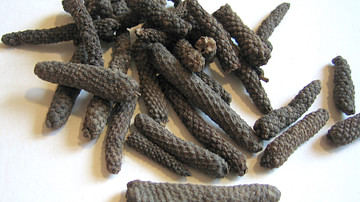
Middle Eastern Power Shifts & the Trade of Pepper from East to West
Pepper has long been the king of spices and for almost 2,000 years dominated world trade. Originating in India, it was known in Greece by the 4th century BCE and was an integral part of the Roman diet by 30 BCE. It remained a force in Europe...

Definition
War of the Austrian Succession - How One Woman's Right to Rule Plunged Europe into War
The War of the Austrian Succession (1740-1748) was a major conflict fought between the great powers of Europe, sparked by a dispute over the right of a woman – Maria Theresa – to succeed to the Austrian throne. Maria Theresa was supported...

Definition
Celtic Warfare
The Celts were a linguistic group which spanned across a wide geographic area and included numerous cultures and ethnicities. Because of this fact, the traditions, practices, and lifestyles of Celtic-speaking peoples varied considerably...

Definition
Feudalism
Feudalism was the system in 10th-13th century European medieval societies where a social hierarchy was established based on local administrative control and the distribution of land into units (fiefs). A landowner (lord) gave a fief, along...

Image
Map of the Urnfield Culture c. 1300 BCE
This map illustrates the spread of the Urnfield culture in Europe by around 1300 BCE, a late Bronze Age archaeological horizon named for the practice of cremating the dead and placing their ashes in urns buried in fields. Lasting from roughly...

Article
The Causes of WWI
The origins of the First World War (1914-18) are many and varied, with some even dating back several decades, but a political assassination in the Balkans in the summer of 1914 was the spark that blew up Europe's political powder keg, that...

Article
What Were the Consequences of WWII?
The consequences of the Second World War (1939-45) were many and varied. Nazi Germany, Fascist Italy, and military-dominated Japan were all defeated. Many occupied countries were liberated and regained their freedom while others were obliged...

Article
Early Human Migration
Disregarding the extremely inhospitable spots even the most stubborn of us have enough common sense to avoid, humans have managed to cover an extraordinary amount of territory on this earth. Go back 200,000 years, however, and Homo sapiens...
