
Search
Remove Ads
Advertisement
Search Results

Image
Map of the Origin and Spread of Buddhism
Buddhism originated in the Ganges Plain of Magadha (modern Bihar, India) during the 5th–4th century BCE, following the enlightenment of Siddhartha Gautama, the Buddha (c. 5th century BCE). Initially transmitted through oral teaching and monastic...

Definition
Stupa
A stupa (literally “heap” or “pile”) is a reliquary, a shrine containing the remains of a holy or sainted person and/or artifacts (relics) associated with them, originating in India prior to the 5th century BCE as tombs of holy men and evolving...
Definition
Saichō
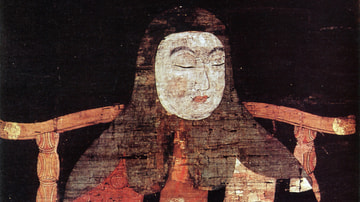
Saichō, also known as Dengyo Daishi (767-822 CE), was a monk and scholar who founded the Buddhist Tendai Sect in Japan. Based on the teachings of the Chinese Tiantai Sect, Saichō's simplified and inclusive version of Buddhism grew in popularity...

Video
Buddhism, Taoism and Confucianism in China
This video describes the three ancient faiths common to China: Buddhism, Taoism and Confucianism.

Article
Tibetan Sand Mandalas
Tibetan sand mandalas are works of art created to encourage healing, peace, and purification generally as well as spiritual or psychological focus specifically for those creating and viewing it. A mandala (Sanskrit for "circle") is a geometric...

Image
The Eightfold Path In Buddhism
This infographic illustrates the Eightfold Path (आर्याष्टाङ्गमार्ग", Āryāṣṭāṅgamārga), a core teaching in Buddhism, established by Siddhartha Gautama, the Buddha, over 2,500 years ago as a way to overcome suffering and achieve enlightenment...
Image
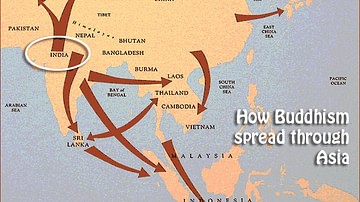
The Spread of Buddhism
A map illustrating the spread of Buddhism from its origins in India in the 5th century BCE with the teachings of Siddhartha Gautama - the Buddha.

Video
Buddhism and Jainism - Part 2 Jainism
Welcome back to the 7th lesson in Indian history in which you will see about Jainism indian history/ jainism lecture for upsc, which we hope is usefull for your jainism and buddhism upsc exams, Certain questions have been asked about buddhism...

Interview
Rubin Museum's Faith and Empire: Tibetan Buddhist Art
Faith and Empire: Art and Politics in Tibetan Buddhism, a new exhibition at the Rubin Museum of Art in New York, explores the dynamic historical intersection of politics, religion, and art as reflected through Tibetan Buddhism. The exhibition...

Definition
Tara
Tara is a female deity in both Hinduism and Buddhism who personifies compassion and offers salvation from the suffering of rebirth and death. She is thought to have been born of empathy for the suffering world and is regularly invoked for...
