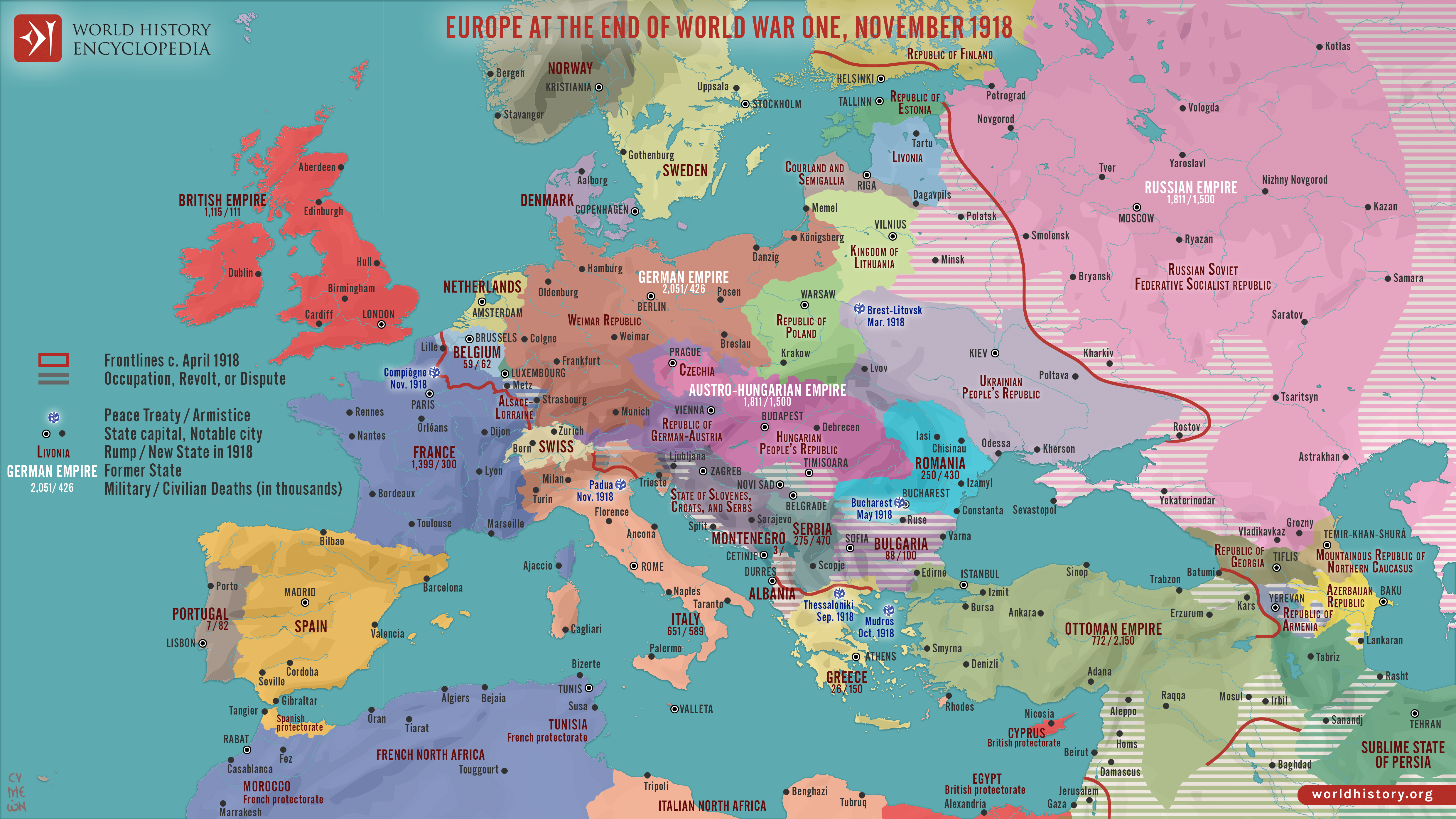
Map of Europe at the End of WW I, 1918
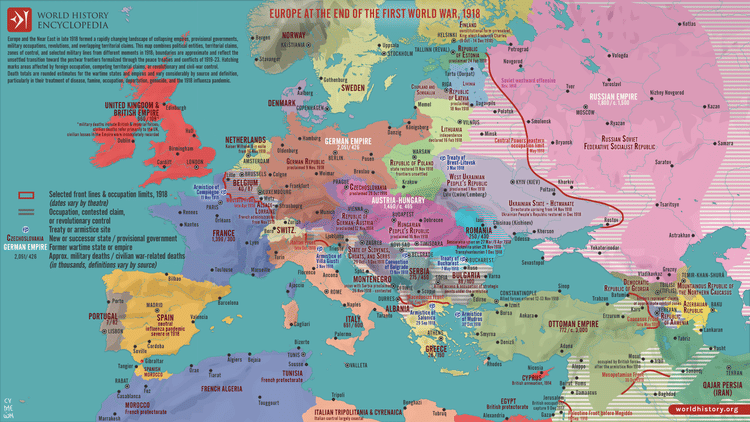
The end of the First World War (1914–1918) transformed Europe and the Near East through the military defeat of the Central Powers and the collapse of the German, Austro-Hungarian, Russian, and Ottoman empires. Although the Armistice of Compiègne (11 November 1918) ended fighting between Germany and the Allies, warfare and political violence continued elsewhere. Revolutions, foreign occupations, nationalist movements, and civil wars produced rapidly changing governments and zones of control.
The postwar settlement attempted to replace dynastic empires with nation-states, influenced partly by the principle of self-determination advanced by U.S. President Woodrow Wilson (presidency 1913–1921). Poland and Czechoslovakia emerged, while new republics appeared in the Baltic region and Caucasus; the Kingdom of Serbs, Croats and Slovenes followed on 1 December 1918. Yet populations were ethnically intermixed, territorial claims overlapped, and the treaties of 1919–23 left significant minorities and disputed borders, contributing to instability throughout the interwar period.