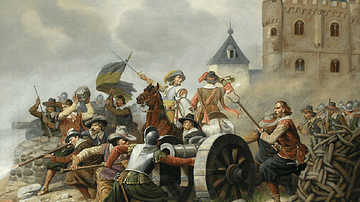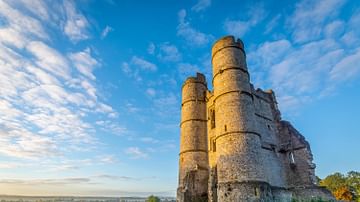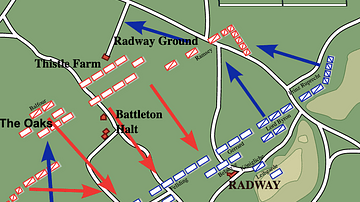
There were over 600 battles and sieges in the English Civil Wars (1642-1651) between Parliament and the English monarchy. In this collection of resources, we examine nine of the most important military struggles that progressed the war, diverted it into Scotland, and brought the downfall of first King Charles I of England (r. 1625-1649) and then his son Charles II.
Thanks to superior resources and the professional New Model Army, the Parliamentarians ('Roundheads') eventually won the bitter war against the Royalists ('Cavaliers'). The monarchy was abolished and a republic was established with Oliver Cromwell (1599-1658) at its head, the Lord Protector.
The main battles of the English Civil Wars were:
- The Battle of Edgehill in October 1642
- The Storming of Bristol in July 1643
- The First Battle of Newbury in September 1643
- The Battle of Marston Moor in July 1644
- The Second Battle of Newbury in October 1644
- The Battle of Naseby in June 1645
- The Siege of Bristol in 1645 (September)
- The Battle of Preston in 1648
- The Battle of Dunbar in 1650
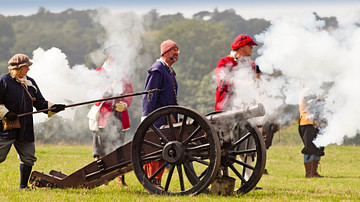
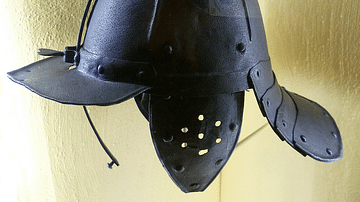
The collection examines the specific causes of each engagement and their context within the wider war, the commanders involved, the types of infantry and cavalry, and the weapons they carried, as well as the artillery in use in this period.
The night is wild and wet; the Harvest Moon wades deep among clouds of sleet and hail. Whoever has a heart for prayer, let him pray now, for the wrestle of death is at hand…We English have some tents; the Scots have none. The hoarse sea moans bodeful, swinging low and heavy against these whinstone bays; the sea and the tempests are abroad, all else sleep but we…
Thomas Carlisle