
Search
Did you mean: Sepoy?

 This answer was generated by
 Search Results
Image
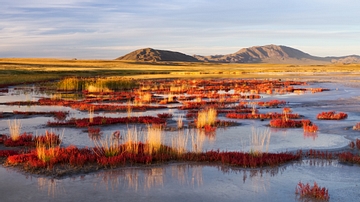
Mammoth Steppe
The Ubsunur Hollow Biosphere Reserve, depicted here, contains some of the last stretches of the so-called mammoth steppe; an ecosystem in which the woolly mammoth thrived during the Pleistocene.
Image
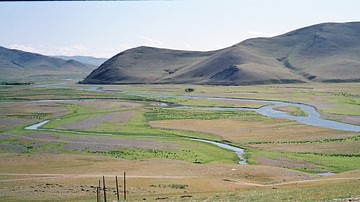
The Mongolian Steppe
A panoramic view of the Mongolian Steppe.

Article
Scythian Territorial Expanse
With 7600 perimeter miles (12,231 km), the Scythians roamed and ruled over an astonishing 1.5 million mi² (2.4 million km²) of territory between the 7th and 3rd centuries BCE. Although building an empire was never in their interest, Scythian...

Video
The Scythians: Nomad Warriors of the Steppe with Barry Cunliffe
Sir Barry Cunliffe has been Professor of European Archaeology at the University of Oxford for 35 years and is Fellow of the British Academy. In this talk, he discusses his new book "The Scythians: Nomad Warriors of the Steppe", a masterful...

Video
The Scythians: Nomad Warriors of the Steppe | Barry Cunliffe | Talks at Google
Sir Barry Cunliffe has been Professor of European Archaeology at the University of Oxford for 35 years and is Fellow of the British Academy. In this talk, he discusses his latest book "The Scythians: Nomad Warriors of the Steppe" (Sep. 2019...

Video
Scythians: tattooed people of the Siberian steppe
Curator St John Simpson describes the fascinating and intricate tattoos found on Scythian bodies.

Definition
Scythians
The Scythians were a nomadic people whose culture flourished between the 7th and 3rd century BCE in a territory ranging from Thrace in the west, across the steppe of Central Asia, to the Altai Mountains of Mongolia in the east. This covers...

Definition
Chariot
The chariot was a light vehicle, usually on two wheels, drawn by one or more horses, often carrying two standing persons, a driver and a fighter using bow-and-arrow or javelins. The chariot was the supreme military weapon in Eurasia roughly...

Definition
Mongol Empire
The Mongol Empire (1206-1368) was founded by Genghis Khan (r. 1206-1227), first Great Khan or 'universal ruler' of the Mongol peoples. Genghis forged the empire by uniting nomadic tribes of the Asian steppe and creating a devastatingly effective...

Article
The Nerge: Hunting in the Mongol Empire
The peoples of the Mongol Empire (1206-1368 CE) were nomadic, and they relied on hunting wild game as a valuable source of protein. The Asian steppe is a desolate, windy, and often bitterly cold environment, but for those Mongols with sufficient...
