
Search
Remove Ads
Advertisement

 This answer was generated by
 Search Results

Article
Roman Mosaics
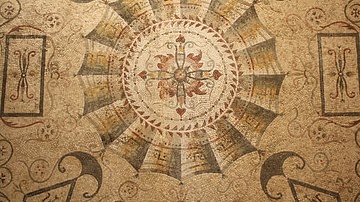
Roman mosaics were a common feature of private homes and public buildings across the empire from Africa to Antioch. Not only are mosaics beautiful works of art in themselves but they are also an invaluable record of such everyday items as...
Definition
Mosaic
Mosaics are designs and images created using small pieces (tesserae) of stone or other materials which have been used to decorate floors, walls, ceilings, and precious objects since before written records began. Like pottery, mosaics have...
Image
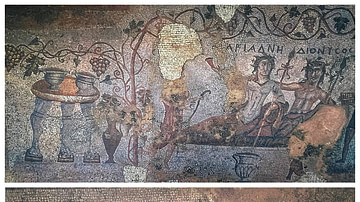
Roman Mosaics from Dzalisi
Two Roman mosaic panels from the thermal baths of a luxurious Roman-style villa at the Dzalisa Archaeological Site in Georgia near Mtskheta, dated to the 3rd century CE. The upper mosaic is devoted to the cult of Dionysus, the god of wine...

Article
Treasures of Roman Tunisia - 10 Key Sites Explored
Set on the North African coast, Tunisia is home to some of the finest Roman ruins in the Mediterranean. After the fall of Carthage, Rome transformed the region into the prosperous province of Africa, enriched by its fertile plains and bustling...

Definition
Roman Art
The Romans controlled such a vast empire for so long a period that a summary of the art produced in that time can only be a brief and selective one. Perhaps, though, the greatest points of distinction for Roman art are its very diversity...

Article
Ancient Cyprus: A Travel Guide
Lying at the crossroads of the eastern Mediterranean, the island of Cyprus has long been a meeting point for many of the world's great civilizations. Situated where Europe, Asia and Africa meet, its location shaped its history of bringing...

Article
Top 5 Roman Sites in Southern Spain
Almost 700 years of continuous Roman occupation have left impressive traces in the Spanish landscape. Spain was then known as 'Hispania' and is now a fascinating location for the archaeological traveller. The Spanish provinces were amongst...

Definition
Byzantine Art
Byzantine art (4th - 15th century CE) is generally characterised by a move away from the naturalism of the Classical tradition towards the more abstract and universal, there is a definite preference for two-dimensional representations, and...
Image
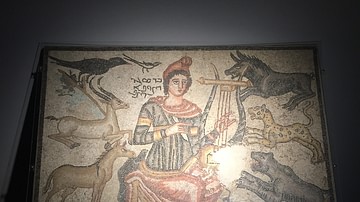
Orpheus Mosaic: Edessa/Urda/Haleplibahçe Mosaics
Orpheus playing his harp for the wild beasts, dates from about 194 CE and is the oldest of the Edessa/Urda mosaics. The artist's name is even engraved in the piece, "Bar Saged."

Article
Exploring Roman Morocco
Morocco, then known as Mauretania, was annexed by the Roman Empire in 40 CE. The Romans in Morocco left a vast legacy with archaeological sites that dot the country's northern landscape, especially Volubilis, with its vestiges of Roman houses...
