
Search
Remove Ads
Advertisement

 This answer was generated by
 Search Results
Image
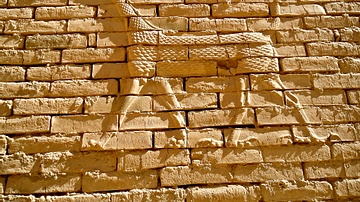
Mušḫuššu at the Processional Way of Babylon
This is a mušḫuššu (or dragon), the symbol of the god Marduk, at the processional way (or street) of the ancient city of Babylon, in modern-day Iraq. Neo-Babylonian period, reign of Nebuchadnezzar II, 6th...

Definition
Tiamat - The Great Mesopotamian Goddess of Chaos
Tiamat is the Mesopotamian goddess associated with primordial chaos and the salt sea, best known from the Babylonian epic Enuma Elish. In all versions of the myth, following the original, Tiamat always...

Definition
Nabu - The Babylonian God of Wisdom and Writing
Nabu (sometimes known as Tutu) was the Babylonian god of wisdom, learning, prophecy, scribes, and writing, also responsible for the abundant harvest and all growing things. His name means "the Announcer,"...
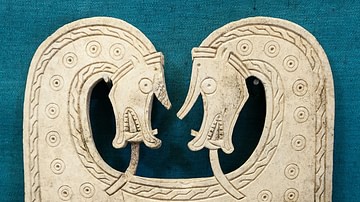
Image Gallery
A Gallery of Dragons from Around the World
Dragons appear in the myths and legends of civilizations around the world from ancient times to the present day. Like the lion in ancient Mesopotamia, the dragon in some cultures (notably China) came to be...

Image
Dragon of the Ishtar Gate
A Babylonian mušḫuššu dragon, glazed tiles from the Ishtar Gate, which was constructed by Nebuchadnezzar II, c. 575 BCE.
Istanbul Archaeological Museums.
Image
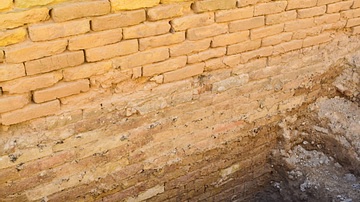
Sirrush Discovery
Part of the floor adjacent to a wall at the Processional Way was removed and a Sirrush (Mušḫuššu) was uncovered. During the 1980s, former president Saddam Hussein ordered the renovation and reconstruction of the ancient city...

Video
The Ishtar Gate of Babylon at the Pergamon Museum, Berlin
This gate was built at the northern side of the city of Babylon by the king Nebuchadnezzar II in 575 BCE. It was the eighth gate into the city of Babylon, Mesopotamia (modern Babil Governorate...
