
Search
Did you mean: Chrocus?

 This answer was generated by
 Search Results
Image
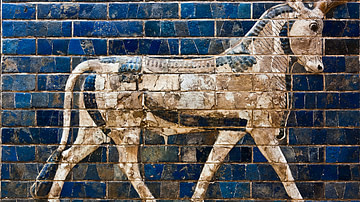
Aurochs from Ishtar gate
Aurochs from Ishtar Gate at Babylon, constructed in about 575 BCE by order of King Nebuchadnezzar II.
On display in Istanbul Archaeology Museum in Istanbul, Turkey.

Definition
Lascaux Cave
Lascaux Cave is a Palaeolithic cave situated in southwestern France, near the village of Montignac in the Dordogne region, which houses some of the most famous examples of prehistoric cave paintings. Close to 600 paintings – mostly of animals...

Definition
Chauvet Cave
The Chauvet Cave (also known as the Chauvet-Pont-d'Arc Cave) is a Palaeolithic cave situated near Vallon-Pont-d'Arc in the Ardèche region of southern France that houses impeccably preserved, exquisite examples of prehistoric art. Now reliably...

Definition
Ice Age
An ice age is a period in which the earth's climate is colder than normal, with ice sheets capping the poles and glaciers dominating higher altitudes. Within an ice age, there are varying pulses of colder and warmer climatic conditions, known...

Definition
Ishtar Gate
The Ishtar Gate was constructed by the Babylonian King Nebuchadnezzar II circa 575 BCE. It was the eighth gate of the city of Babylon (in present-day Iraq) and was the main entrance into the city. The Ishtar Gate was part of Nebuchadnezzar's...
Definition
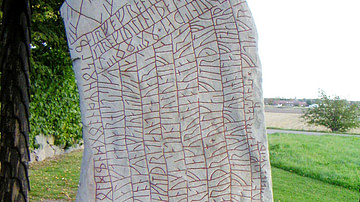
Runes
Runes are letters in the runic alphabets of Germanic-speaking peoples, written and read most prominently from at least c. 160 CE onwards in Scandinavia in the Elder Futhark script (until c. 700 CE) and the Younger Futhark - which illuminated...
Definition
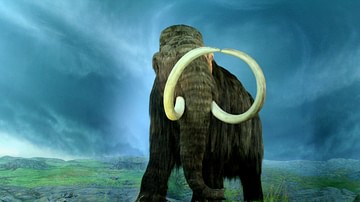
Woolly Mammoth
The woolly mammoth, Mammuthus primigenius, is an extinct herbivore related to elephants who trudged across the steppe-tundras of Eurasia and North America from around 300,000 years ago until their numbers seriously dropped from around 11,000...
Definition
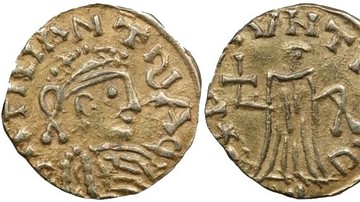
Guntram I of Orléans
Guntram I (also given as Gontrand, Gunthram, or Gunthchramn) was a Merovingian king who ruled over the Frankish kingdom of Orléans, later referred to as Burgundy, from 561 to 592. He often took on the role of mediator in the disputes between...

Article
Agriculture in the Fertile Crescent & Mesopotamia
The ancient Near East, and the historical region of the Fertile Crescent in particular, is generally seen as the birthplace of agriculture. The first agricultural evidence comes from the Levant, from where it spread to Mesopotamia, enabling...
Article
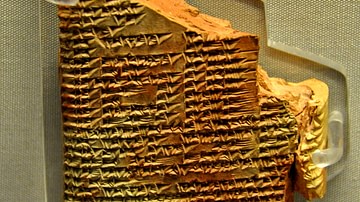
The Myth of Etana
The Myth of Etana is the story of the Sumerian antediluvian King of Kish who ascends to heaven on an eagle to request the Plant of Birth from the gods so that he might have a son. Etana is named as the first king of Kish in the Sumerian King...
