
Search
Did you mean: Zakutu?
Remove Ads
Advertisement

 This answer was generated by
 Search Results

Article
Festivals in Ancient Mesopotamia - Courting the Goodwill of the Gods
Festivals in ancient Mesopotamia honored the patron deity of a city-state or the primary god of the city that controlled a region or empire. The earliest, the Akitu festival, was first...

Definition
Nabu - The Babylonian God of Wisdom and Writing
Nabu (sometimes known as Tutu) was the Babylonian god of wisdom, learning, prophecy, scribes, and writing, also responsible for the abundant harvest and all growing things. His name means "the Announcer,"...
Image
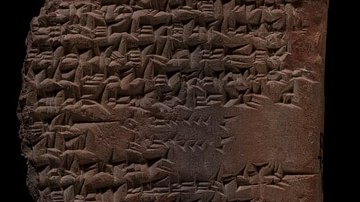
Tablet Describing the Akitu Festival
Fragment of a Babylonian clay tablet, with 16 lines of inscription describing rites in Babylon relating to the Akitu festival. Fragment of the right half, copy of a text containing regulations for making offerings...

Video
Oldest Festival (Akitu Eid) in Mesopotamia
In this video I will talk about one of the oldest festivals in the world happened in Mesopotamia.

Definition
Marduk - The Great God of Babylon
Marduk was the patron god of Babylon who presided over justice, compassion, healing, regeneration, magic, and fairness, although he is also sometimes referenced as a storm god and agricultural deity. He rose to prominence...

Collection
A Gallery of Religious Festivals from Around the World
Religious festivals have featured as a central aspect of civilization for thousands of years, the earliest thought to be celebrations of the New Year and the concept of rebirth and new beginnings...

Definition
Inanna - The Most Popular Goddess of Ancient Mesopotamia
Inanna is the ancient Sumerian goddess of love, sensuality, fertility, procreation, and also of war. She later became identified by the Akkadians and Assyrians as the goddess Ishtar, and further...

Article
The Mesopotamian Pantheon - The Ancient Gods and Goddesses of the Near East
The gods of the Mesopotamian region were not uniform in name, power, provenance or status in the hierarchy. Mesopotamian culture varied from region to region and, because of this...

Article
The Marduk Prophecy - Travels of the Statue of a Babylonian God
The Marduk Prophecy is an Assyrian document dating to between 713 and 612 BCE found in a building known as The House of the Exorcist, adjacent to a temple in the city of Ashur. It relates the...
Image
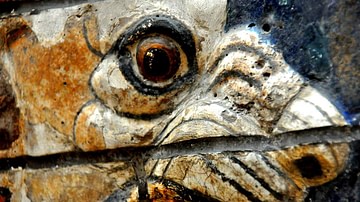
Lion's Head from the Processional Street, Babylonia
A close-up view of a lion's head work relief which decorates the processional street (from Marduk temple to the Ishtar Gate and Akitu Temple). It was made of glazed terracotta bricks. Reign of Nebuchadnezzar...
