


One of the oldest known examples of ceramic in the world, the Black Venus was found at the pre-historic site of Dolni Vestonice in Moravia, Czech Republic in 1925 CE. The figure is thought to have been sculpted between 29,000 and 25,000 years ago. Its faceless, voluptuous figure is typical of the Venus figurines of Ice Age Europe, but the material used to make it is rare. It gets its unique black colour from the combination of ground bone and clay used to make it. This material produced a self-glazing, black finish in the kiln and can be seen on many of the other ceramic pieces found at the same site. The original figurine is rarely on public display, but it is part of the collection of the Moravian Museum's Anthropos Pavilion in Brno, Czech Republic.
Related Images
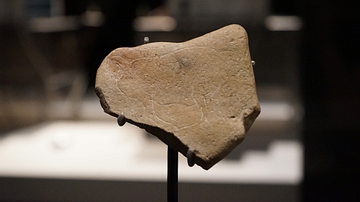
Ice Age Drawing of a Bison

The Venus of Willendorf

The Venus of Laussel
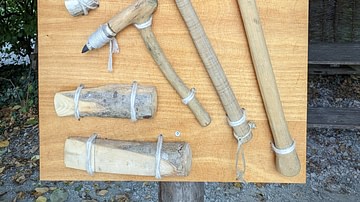
Stone Age Tools (Modern Recreations)

Stone Age Tools Made From Antlers

Jomon Stone Figurine
Cite This Work
APA Style
Hitchcock, D. (2017, July 07). Black Venus of Dolni Vestonice. World History Encyclopedia. https://www.worldhistory.org/image/6867/black-venus-of-dolni-vestonice/
Chicago Style
Hitchcock, Don. "Black Venus of Dolni Vestonice." World History Encyclopedia, July 07, 2017. https://www.worldhistory.org/image/6867/black-venus-of-dolni-vestonice/.
MLA Style
Hitchcock, Don. "Black Venus of Dolni Vestonice." World History Encyclopedia, 07 Jul 2017, https://www.worldhistory.org/image/6867/black-venus-of-dolni-vestonice/.
