

Qutb Minar, photograph by Juan Ángel Piqueras, Mehrauli, South Delhi, Delhi, India, 18 August 2026.
The Qutb Minar (also spelled Qutub or Qutab Minar) is the world's tallest brick minaret, rising to a height of 72.5 meters (238 ft) from a base diameter of 14.3 meters (47 ft) that tapers to just 2.7 meters (9 ft) near the top. Inside, a spiral staircase of 379 steps leads to the upper levels. Construction began in 1199 CE under Qutb-ud-din Aibak, founder of the Delhi Sultanate, and was completed by his successor Iltutmish in the early 13th century CE, with later repairs and additions carried out by Firoz Shah Tughlaq in the 14th century CE and further restorations in subsequent centuries.
About the Author
Related Images

Qutb Minar

Map of the Rise of the Delhi Sultanate: The Mamluk Period - From Slave Commanders to Sultans

Map of the Delhi Sultanate under the Tughlaqs
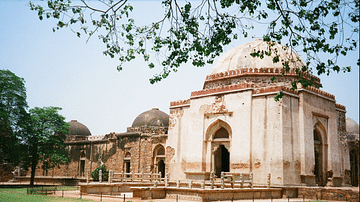
Tomb of Feroz Shah Tughluq

Map of the Mamluk Sultanate of Egypt c. 1330 - Slave Soldiers Who Ruled an Empire

Map of the Sultanate of Rum & Anatolia, c. 1200 - From Manzikert to Köse Dağ - Seljuk Expansion and Fall
References
- Asher, Catherine. Delhi's Qutb Complex, the Minar, Mosque and Mehrauli. Marg Foundation, 2017.
- J A Page & Y D Sharma. Qutb Minar & Adjoining Monuments. Archaeological Survey of India, 2002.
- Khan, S. N. & Bilal, M. A. "The Architecture plan of Qutb Complex (Delhi) and its Decoration Analysis." Perennial Journal of History (PJH), Vol, 1, No. 1, (2020), pp. 49-68.
- Qutb Minar and its Monuments, Delhi - UNESCO World Heritage Centre, accessed 16 Sep 2026.
Cite This Work
APA Style
Piqueras, J. Á. (2026, October 06). The Qutb Minar. World History Encyclopedia. https://www.worldhistory.org/image/22160/the-qutb-minar/
Chicago Style
Piqueras, Juan Ángel. "The Qutb Minar." World History Encyclopedia, October 06, 2026. https://www.worldhistory.org/image/22160/the-qutb-minar/.
MLA Style
Piqueras, Juan Ángel. "The Qutb Minar." World History Encyclopedia, 06 Oct 2026, https://www.worldhistory.org/image/22160/the-qutb-minar/.
