


The Holy Roman Empire (962–1806) functioned as a decentralized political system in Central Europe, where imperial authority depended less on centralized power than on negotiation among its leading elites. Central to this structure were the Electors, a select group of princes and archbishops who held the exclusive right to choose the emperor. This electoral system reflected the empire’s character as a federation of semi-autonomous territories, seeking stability through consensus rather than absolute monarchy.
The role of the Electors was formally codified in the Golden Bull of 1356, issued by Emperor Charles IV (reign 1346–1378). This landmark decree established seven electors: three ecclesiastical rulers: the Archbishops of Mainz, Trier, and Cologne, and four secular princes: the King of Bohemia, the Count Palatine of the Rhine, the Duke of Saxony, and the Margrave of Brandenburg. Chosen for their territorial strength and strategic importance, the Electors shaped imperial succession and policy, balancing the authority of the emperor against the autonomy of the empire’s constituent states.
About the Author
Related Images
Bottles with Four Tubes from Roman Cologne and Trier
Wenceslaus IV of Bohemia
The Duke of Berry and the Count of Provence as Children
Charles Gravier, count of Vergennes

Mainz Old Town
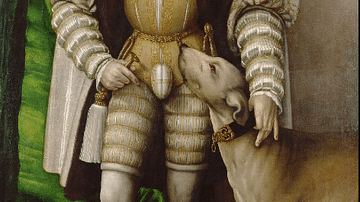
Charles V, Holy Roman Emperor
Cite This Work
APA Style
Netchev, S. (2025, June 02). The Electors of the Holy Roman Empire. World History Encyclopedia. https://www.worldhistory.org/image/20526/the-electors-of-the-holy-roman-empire/
Chicago Style
Netchev, Simeon. "The Electors of the Holy Roman Empire." World History Encyclopedia, June 02, 2025. https://www.worldhistory.org/image/20526/the-electors-of-the-holy-roman-empire/.
MLA Style
Netchev, Simeon. "The Electors of the Holy Roman Empire." World History Encyclopedia, 02 Jun 2025, https://www.worldhistory.org/image/20526/the-electors-of-the-holy-roman-empire/.
