


Vaccines are biological preparations that train the immune system to recognize and respond to specific infectious agents, reducing the risk of disease and its complications. Since the late 18th century, vaccination has transformed public health by shifting medicine toward prevention rather than treatment after infection. Beginning with Edward Jenner's smallpox vaccination in 1796, successive breakthroughs against viral and bacterial diseases dramatically reduced mortality and helped make large-scale disease control possible.
- Smallpox Vaccine (1796) – Edward Jenner – Jenner demonstrated that exposure to cowpox could protect against smallpox, establishing the principle of vaccination. Global immunization ultimately led to the eradication of smallpox in 1980.
- Rabies Vaccine (1885) – Louis Pasteur and colleagues – the first successful vaccine used after exposure to a normally fatal infection demonstrated that immunization could prevent disease even after contact with a pathogen.
- BCG Tuberculosis Vaccine (1921) – Albert Calmette and Camille Guérin – developed from an attenuated strain of Mycobacterium bovis, BCG became one of the world's most widely administered vaccines and remains particularly important for protecting children against severe forms of tuberculosis.
- DTP Vaccine (1940s) – multiple researchers – combined protection against diphtheria, tetanus, and pertussis (whooping cough) into a routine childhood immunization, greatly reducing illness and deaths from three major infectious diseases.
- Influenza Vaccine (1940s) – multiple researchers, including Thomas Francis Jr. and Jonas Salk – early influenza vaccines demonstrated that vaccination could be adapted to a rapidly changing virus and became the basis for modern seasonal influenza immunization.
- Polio Vaccine (1955 onward) – Jonas Salk and Albert Sabin – Salk's inactivated vaccine and Sabin's later oral vaccine enabled mass immunization campaigns that reduced global polio cases by more than 99% and brought the disease close to eradication.
- Measles Vaccine (1963) – John Enders and colleagues – widespread vaccination transformed measles from an almost universal childhood infection into a preventable disease, although outbreaks continue where vaccination coverage falls.
Together, these seven vaccines illustrate how advances in microbiology, immunology, public health, and international cooperation transformed the human relationship with infectious disease. Vaccination contributed to dramatic reductions in childhood mortality, made the eradication of smallpox possible, and brought polio close to global elimination. Their history shows how scientific discovery, public-health infrastructure, and sustained immunization programs combined to make vaccination one of the most consequential developments in the history of medicine.
About the Author
Related Images

Edward Jenner Administering a Vaccination

Letter Carrier in 1918 Flu Pandemic

Precautions Against Influenza

Fort Porter Flu Patient

US Public Health Pamphlet for 1918 Flu
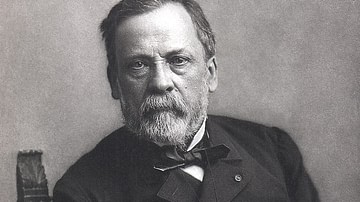
Louis Pasteur
Cite This Work
APA Style
Netchev, S. (2025, February 20). 7 Vaccines That Changed the History of Medicine: Two Centuries of Immunization, 1796–1963. World History Encyclopedia. https://www.worldhistory.org/image/20064/7-vaccines-that-changed-the-history-of-medicine/
Chicago Style
Netchev, Simeon. "7 Vaccines That Changed the History of Medicine: Two Centuries of Immunization, 1796–1963." World History Encyclopedia, February 20, 2025. https://www.worldhistory.org/image/20064/7-vaccines-that-changed-the-history-of-medicine/.
MLA Style
Netchev, Simeon. "7 Vaccines That Changed the History of Medicine: Two Centuries of Immunization, 1796–1963." World History Encyclopedia, 20 Feb 2025, https://www.worldhistory.org/image/20064/7-vaccines-that-changed-the-history-of-medicine/.
