


The Allied D-Day landings (D-Day is a military term used to designate the day on which a combat operation is scheduled to begin), which took place on June 6, 1944, marked the largest seaborne invasion in history and a pivotal moment in the Second World War. The invasion aimed to establish a foothold for the Allied forces on the continent and liberate German-occupied Western Europe. Allied troops from the United States, United Kingdom, Canada, and other nations stormed the beaches of Normandy, France, in a coordinated assault across five landing zones: Utah, Omaha, Gold, Juno, and Sword. Despite facing heavily fortified coastal defenses and fierce resistance from German forces, the Allied troops managed to establish beachheads and push inland. The successful D-Day landings paved the way for the liberation of France and the eventual defeat of Nazi Germany, marking an important turning point in the war.
About the Author
Related Images

Map of the Western Front in World War I, 1914-1918
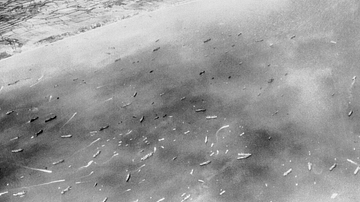
Aerial View, Omaha Beach

Destroyed Vehicles, Omaha Beach
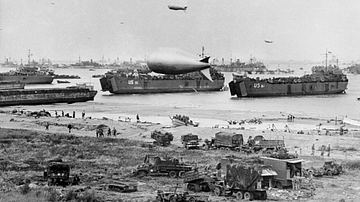
Logistics, Omaha Beach

Map of WWII North Africa Campaign, 1940-1943
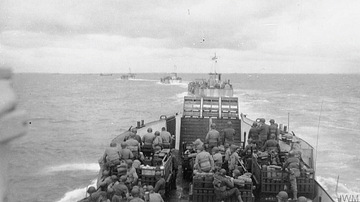
Landing Craft, Utah Beach
External Links
Cite This Work
APA Style
Netchev, S. (2024, May 22). Allied D-Day Landings of WWII, June 1944. World History Encyclopedia. https://www.worldhistory.org/image/18983/allied-d-day-landings-of-wwii-june-1944/
Chicago Style
Netchev, Simeon. "Allied D-Day Landings of WWII, June 1944." World History Encyclopedia, May 22, 2024. https://www.worldhistory.org/image/18983/allied-d-day-landings-of-wwii-june-1944/.
MLA Style
Netchev, Simeon. "Allied D-Day Landings of WWII, June 1944." World History Encyclopedia, 22 May 2024, https://www.worldhistory.org/image/18983/allied-d-day-landings-of-wwii-june-1944/.
