


The First Peace of Nisibis (299 CE) established a rare moment of stability in the long rivalry between the Roman and Sasanian Empires, fixing their borders in the Caucasus after Emperor Diocletian (reign 284–305 CE) and his co-emperor Galerius defeated Shah Narseh of Persia (reign 293–302 CE). The treaty awarded Rome control of five provinces east of the Tigris, secured Armenia as a Roman ally, and recognized Iberia under Roman influence. This settlement reshaped the balance of power in the Caucasus, allowing local states such as Lazica, Iberia, and Caucasian Albania to maintain autonomy while positioned between two great empires.
The early 4th century also marked a cultural and religious turning point for the region. Peaceful conditions encouraged trade and the exchange of language, art, and technology across imperial and local frontiers, while the spread of Christianity gained momentum, with Armenia adopting the new faith officially in 301 CE. Yet the respite was temporary: by mid-century, renewed Roman–Persian clashes destabilized the Caucasus once again, confirming its role as a contested frontier zone and a crossroads of empires.
About the Author
Related Images

Map of the Sassanid Empire c. 620 CE - Persia’s Last Great Imperial Power
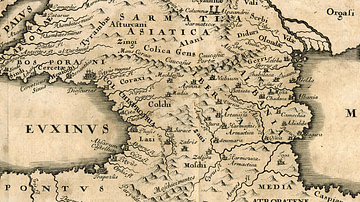
Map of Colchis

Map of the Scythian Expanse, c. 700-300 BCE

Map of Sogdiana, ca. 300 BCE
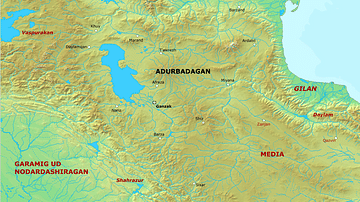
Sassanian Adurbadagan Province and Arran
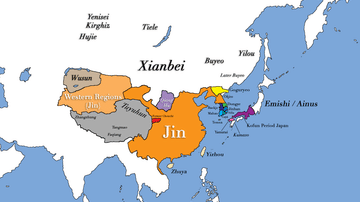
East Asia circa 300 CE
Cite This Work
APA Style
Netchev, S. (2023, December 21). Map of the Caucasus after the Peace of Nisibis, c. 300 CE. World History Encyclopedia. https://www.worldhistory.org/image/18289/map-of-the-caucasus-after-the-peace-of-nisibis-c-3/
Chicago Style
Netchev, Simeon. "Map of the Caucasus after the Peace of Nisibis, c. 300 CE." World History Encyclopedia, December 21, 2023. https://www.worldhistory.org/image/18289/map-of-the-caucasus-after-the-peace-of-nisibis-c-3/.
MLA Style
Netchev, Simeon. "Map of the Caucasus after the Peace of Nisibis, c. 300 CE." World History Encyclopedia, 21 Dec 2023, https://www.worldhistory.org/image/18289/map-of-the-caucasus-after-the-peace-of-nisibis-c-3/.
