
Celebrate Our Anniversary with Trivia!
Join us on August 23 for a free virtual trivia party featuring questions about ancient civilizations, U.S. history, unusual historical facts, pop culture, and more.

 2
2
This text is available in other languages:

The period of the “Barracks Emperors” coincides with the Crisis of the Third Century (235–284 CE), one of the most turbulent phases in Roman history. Beginning with the assassination of Severus Alexander (reign 222–235 CE), imperial authority increasingly depended on the support of the army, as military commanders were proclaimed emperor by their troops, often without dynastic legitimacy or senatorial approval. This resulted in rapid turnover, with numerous short-lived reigns reflecting a fragmented political system in which control of the military outweighed institutional continuity. The empire faced simultaneous pressures, including internal revolts, regional breakaway states, and intensifying threats along its frontiers.
Several emperors, such as Decius (reign 249–251 CE), Valerian (reign 253–260 CE), and Gallienus (reign 253–268 CE), attempted to stabilize the situation, but their efforts were constrained by persistent warfare and economic strain. External challenges from the Sasanian Empire and various trans-Rhine and Danubian groups compounded internal instability. The crisis gradually subsided with the rise of Diocletian (reign 284–305 CE), whose reforms reorganized administration, strengthened military command, and introduced new structures of governance that restored a degree of stability.
About the Author
Related Images

The Roman Empire and the Crisis of the Third Century, c. 270 CE - Pretenders, Breakaways, Plague, and the Fight for Unity
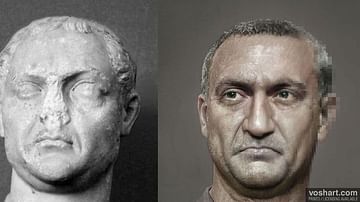
Valerian (Artistic Facial Reconstruction)
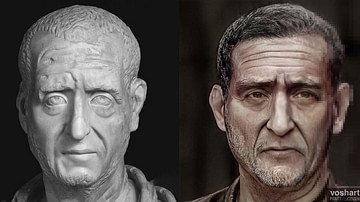
Decius (Artistic Facial Reconstruction)

Map of the Diocletian's First Tetrarchy and the Roman Empire - Stability Through Division, Succession by Design

Map of the Roman Empire under Septimius Severus, 193-211 CE - Reshaping an Empire: Power, Ambition, and the Birth of a Military Dynasty
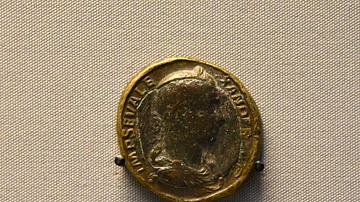
Bimetallic Medallion of Emperor Severus Alexander
Cite This Work
APA Style
Netchev, S. (2026, May 02). The Barracks Emperors of Rome, 235 - 284 CE: Military Power and Imperial Instability. World History Encyclopedia. https://www.worldhistory.org/image/17389/the-barracks-emperors-of-rome-235---284-ce/
Chicago Style
Netchev, Simeon. "The Barracks Emperors of Rome, 235 - 284 CE: Military Power and Imperial Instability." World History Encyclopedia, May 02, 2026. https://www.worldhistory.org/image/17389/the-barracks-emperors-of-rome-235---284-ce/.
MLA Style
Netchev, Simeon. "The Barracks Emperors of Rome, 235 - 284 CE: Military Power and Imperial Instability." World History Encyclopedia, 02 May 2026, https://www.worldhistory.org/image/17389/the-barracks-emperors-of-rome-235---284-ce/.
