
Search
Remove Ads
Advertisement
Search Results

Definition
Ancient Japan
Ancient Japan has made unique contributions to world culture which include the Shinto religion and its architecture, distinctive art objects such as haniwa figurines, the oldest pottery vessels in the world, the largest wooden buildings...

Definition
Unified Silla Kingdom
The Unified Silla Kingdom (668- 935 CE) was the first dynasty to rule over the whole of the Korean peninsula. After centuries of battles with the other states of the Three Kingdoms Period (57 BCE - 668 CE) Silla benefitted...

Definition
Nara Period
The Nara Period (Nara Jidai) of ancient Japan (710-794 CE), so called because for most of that time the capital was located at Nara, then known as Heijokyo, was a short period of transition prior to the significant Heian Period. Despite...

Definition
Khitan
The Khitan people formed the Liao dynasty and ruled parts of Mongolia, Manchuria, and northern China from 907 to 1125 CE. Adopting elements of Chinese government and culture, the Khitan were more than a match for their rivals the Song...
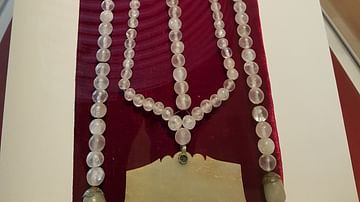
Image
Jade & Crystal Ornament
Jade, gilded bronze and rock crystal jewellery piece. 56 cm (length). Tang Dynasty, 669 CE. Excavated from the tomb of Liu Zhi (civil official), and his consort. Northwest University, Chang'an District, Xi'an. Shaanxi Provincial...
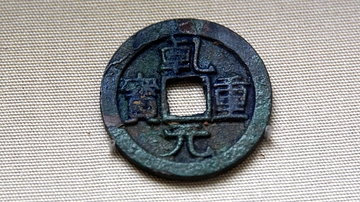
Image
Bronze Qianyuan Heavy Coin
This is a copper alloy coin with a double rim, worth 50 standard coins. Obverse, Chinese inscription. Minted in China. Tang Dynasty, 759 CE. (The British Museum, London).

Image
Chinese Standing Bodhisattva
This standing bodhisattva made of Sandstone comes from Cave 14 from the renown temples of Tianlongshan in China's Shanxi province. The influence from Greco-Roman art as well as South Asian art is palpable. It was made...

Image
Chinese Vessel in the Shape of a Duck and Rhyton
This beautiful vessel in the shape of a duck and rhyton comes from China's Henan province, and it was made at the Gongxian kilns during the Tang Dynasty. It is believed to have been created during the...

Image
Map of the Silk Roads of Eurasia, c. 780–800 - Trade Routes, Empires, and Cultural Exchange
In the late 8th century, the Silk Roads formed an interconnected network of overland caravan routes and maritime connections linking East Asia, Central Asia, India, the...

Image
Chinese Bronze Mirror with Phoenix Motif
This Chinese bronze mirror with a phoenix motif dates from the Tang dynasty (618-907 CE). The phoenix was the female counterpart to the male dragon in mythology, and it was also a symbol of Chinese empresses...
