
Search
Did you mean: Norns?
Remove Ads
Advertisement
Search Results
Definition
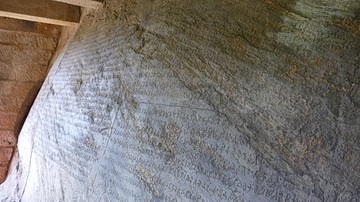
The Edicts of Ashoka the Great
The Edicts of Ashoka are 33 inscriptions engraved on pillars, large stones, and cave walls by Ashoka the Great (r. 268-232 BCE), the third king of the Mauryan Empire (322-185 BCE) of India. One set, the so-called Major...

Definition
Freya Stark
Freya Stark (l. 1893-1993) was an English explorer, writer, and political influencer who chronicled world events, especially in the Near East, throughout the 20th century. Stark both reported on and made the news as her travels, described...
Definition
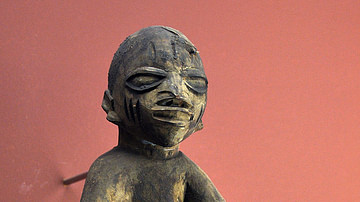
Orisha
Orisha (also given as Orisa and Orishas) are supernatural entities usually referred to as deities in the Yoruba religion of West Africa, though they are actually emanations or avatars of the supreme being Olodumare. Their number is usually...

Definition
Strabo of Amasia - Author of the 1st-Century Geography
Strabo of Amasia (c. (c. 64 BCE - c. 24 CE) was the author of Geography, a 17-book geography of the world as it was known to the Greeks and Romans of the time, extending from Iberia and Mauria (Mauretania...

Definition
Apollo
Apollo was a Greek god associated with the bow, music, and divination. The epitome of youth and beauty, source of life and healing, patron of the arts, and as bright and powerful as the sun itself, Apollo was perhaps the most loved of...

Definition
Marcus Aurelius
Marcus Aurelius (r. 161 to 180 CE) was a Roman emperor best known as the last of the Five Good Emperors of Rome (following Nerva, Trajan, Hadrian, and Antoninus Pius) and as the author of the philosophical work Meditations. Although...

Definition
Marco Polo
Marco Polo (1254-1324 CE) was a Venetian merchant and explorer who travelled to China and served the Mongol ruler Kublai Khan (l. 1214-1294 CE) between c. 1275 and 1292 CE. Polo's adventures are recounted in his own writings, The...
Definition
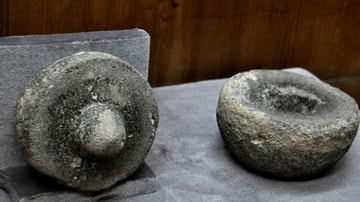
Mesopotamian Science and Technology - Scientific Method in the Ancient Near East
Mesopotamian science and technology developed during the Uruk period (circa 4000-3100 BCE) and the Early Dynastic period (circa 2900-2350/2334 BCE) of the Sumerian culture of...

Definition
Ottoman Empire
The Ottoman Sultanate (1299-1922 as an empire; 1922-1924 as caliphate only), also referred to as the Ottoman Empire, written in Turkish as Osmanlı Devleti, was a Turkic imperial state that was conceived by and named after Osman...
Definition
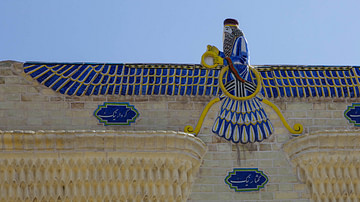
Zarathustra
Zarathustra (also given as Zoroaster, Zartosht, Zarathustra Spitama, l. c. 1500-1000 BCE) was the Persian priest-turned-prophet who founded the religion of Zoroastrianism (also given as Mazdayasna “devotion to Mazda”), the first monotheistic...
