
Search
Did you mean: Wall?
Remove Ads
Advertisement
Search Results

Image
Wool Caulking - Viking Ship Construction 24
Before the overlap surfaces were closed on a Viking ship, a tarred three-ply wool cord was placed between them. Once compressed, this fibrous filler both closed the gap and made the entry of water more difficult, and the first and most elegant...
Image
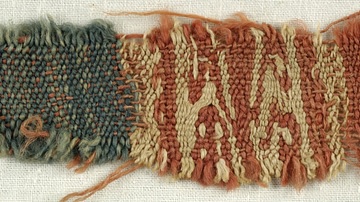
Detail of Coptic Wool Textile
This colourful fragment of a tabby weave is an example of Coptic art. While linen was the preferred textile of ancient Egypt, wool became increasingly important during the Ptolemaic and Roman periods. By Late Antiquity, woolen garments had...
Article
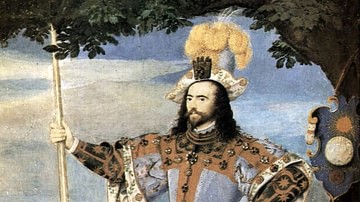
Clothes in the Elizabethan Era
Clothes in the Elizabethan era (1558-1603 CE) became much more colourful, elaborate, and flamboyant than in previous periods. With Elizabeth I of England (r. 1558-1603 CE) herself being a dedicated follower of fashion, so, too, her court...

Article
Ancient Greek Clothing
Ancient Greek clothing developed from the Minoan Civilization of Crete (2000-1450 BCE) through the Mycenean Civilization (1700-1100 BCE), Archaic Period (8th century to c. 480 BCE) and is most recognizable from the Classical Period (c. 480-323...

Definition
East India Company
The English East India Company (EIC or EEIC), later to become the British East India Company, was founded in 1600 as a trading company. With a massive private army and the backing of the British government, the EIC looted the Indian subcontinent...

Definition
Yurt
A yurt (ger in Mongolian) is a large circular tent made of wool felt stretched over a wooden frame used by nomadic peoples of the Asian steppe since before written records began. Yurts are especially associated with Mongol herders and hunters...

Article
Trade Goods of the East India Company
The English East India Company (EIC) was founded in 1600, and it came to control both trade and territories in India, as well as a trade monopoly with China. Goods the EIC traded included spices, cotton cloth, tea, and opium, all in such...
Article
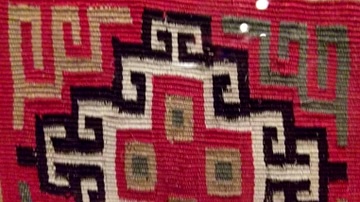
Inca Textiles
For the Incas finely worked and highly decorative textiles came to symbolize both wealth and status, fine cloth could be used as both a tax and currency, and the very best textiles became amongst the most prized of all possessions, even more...

Definition
Medieval Trades
Medieval trades were essential to the daily welfare of the community and those who learned a skill through apprenticeship could make a higher and more regular income than farmers or soldiers. Professionals like millers, blacksmiths, masons...

Definition
Afrika Korps - Germany's Elite Desert Force
The Deutsches Afrika Korps (DAK) was an elite German armoured unit that fought in North Africa during the Second World War (1939-45). The Korps was initially led by Erwin Rommel (1891-1944) before he was promoted to lead a larger force of...
