
Search
Remove Ads
Advertisement
Search Results

Interview
Rubin Museum's Faith and Empire: Tibetan Buddhist Art
Faith and Empire: Art and Politics in Tibetan Buddhism, a new exhibition at the Rubin Museum of Art in New York, explores the dynamic historical intersection of politics, religion, and art as reflected through Tibetan Buddhism. The exhibition...

Article
The Life of Crates of Thebes in Diogenes Laertius
Crates of Thebes (l. c. 360-280 BCE) was one of the most important Cynic philosophers of ancient Greece. He was born to a wealthy family in Thebes but gave away his inheritance after realizing the futility of material possessions and the...
Article
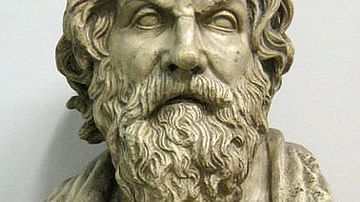
The Life of Antisthenes of Athens in Diogenes Laertius
Antisthenes (c. 445-365 BCE) was a Greek philosopher who founded the Cynic School of Athens. He was a follower of Socrates and appears in Plato's Phaedo as one of those present at Socrates' death. He is one of the primary interlocutors in...

Video
Writing Old Norse in Runes (remake/improved)
Writing in runes isn't a simple one-to-one conversion of one letter to one rune. This video shows how Old Norse was written using the runes of the Younger Futhark, and then looks at examples of real inscriptions from the Viking Age. Contents...

Video
Krákumál: Ragnar Lothbrok's Last Words?
Krákumál is a long (29-stanza) skaldic poem in Old Norse about a dying warrior's great exploits and death in a snake-pit, composed in the voice of Ragnar Lothbrok but dating to centuries after his death. This video features a reading from...

Definition
Renaissance Humanism
Renaissance Humanism was an intellectual movement typified by a revived interest in the classical world and studies which focussed not on religion but on what it is to be human. Its origins went back to 14th-century Italy and such authors...

Definition
Maya Religion
Maya religious beliefs are formed on the notion that virtually everything in the world contains k'uh, or sacredness. K'uh and k'uhul, similar terms which are used to explain the spirituality of all inanimate and animate things, describe the...
Definition
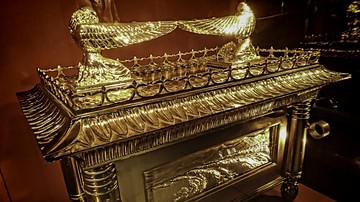
Ark of the Covenant
The Ark of the Covenant refers to the box-like container that held the tablets of the Law received by Moses on Mount Sinai. Tradition claimed that it contained two stone tablets, carved by God, listing the first ten commandments given to...

Definition
Edo Period
The Edo period refers to the years from 1603 until 1868 when the Tokugawa family ruled Japan. The era is named after the city of Edo, modern-day Tokyo, where the Tokugawa shogunate had its government. It is also sometimes referred to as the...

Definition
Henry VIII of England
Henry VIII of England ruled as king from 1509 to 1547. The second Tudor king after his father Henry VII of England (r. 1485-1509), Henry had inherited a kingdom which enjoyed both unity and sound finances. Famous for his six wives as he searched...
