
Search
Did you mean: Trajan's Market?
Remove Ads
Advertisement
Search Results

Article
Visual Chronology of Roman Emperors: Augustus to Constantine
The Julio-Claudian Dynasty Augustus 16 Jan 27 BCE - 19 Aug 14 CE Tiberius 18 Sep 14 CE - 16 Mar 37 CE Caligula 18 Mar 37 CE - 24 Jan 41 CE Claudius 25 Jan 41 CE - 13 Oct 54 CE Nero 13 Oct 54 CE - 11 Jun 68 CE Galba 8 Jun 68 CE -...
Article
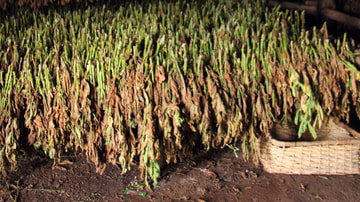
A Brief History of Tobacco in the Americas
The history of tobacco use in the Americas goes back over 1,000 years when natives of the region chewed or smoked the leaves of the plant now known as Nicotiana rustica (primarily in the north) and Nicotiana tabacum (mostly in the south...

Article
The Arch of Constantine, Rome
The Arch of Constantine I, erected in c. 315 CE, stands in Rome and commemorates Roman Emperor Constantine's victory over the Roman tyrant Maxentius on 28th October 312 CE at the battle of Milvian Bridge in Rome. It is the largest surviving...
Article
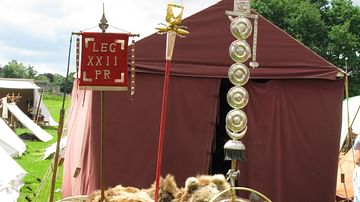
Legions of the Rhine Frontier
After Julius Caesar’s (100-44 BCE) conquest of Gaul, Roman legions pushed the borders of the Roman Empire’s frontier to the banks of the Rhine River. Augustus (r. 27 BCE - 14 CE) divided the newly acquired region into three provinces: Gallia...

Article
Legions of Mesopotamia, Cappadocia, & Arabia
As the Roman Empire expanded further eastward, annexing territories that were once the domain of the Parthians, the legions of Mesopotamia, Cappadocia, and Arabia were called upon to safeguard these newly acquired territories. Mesopotamia...

Article
Rome's Response to the Spread of Christianity
During the 1st century CE, a sect of Jews in Jerusalem claimed that their teacher, Jesus of Nazareth, was the 'messiah' of Israel. 'Messiah' meant 'anointed one', or someone chosen by the God of Israel to lead when God would intervene in...

Article
Top 5 Roman Sites in Southern Spain
Almost 700 years of continuous Roman occupation have left impressive traces in the Spanish landscape. Spain was then known as 'Hispania' and is now a fascinating location for the archaeological traveller. The Spanish provinces were amongst...

Article
North Africa During the Classical Period
Phoenician traders arrived on the North African coast around 900 B.C. and established Carthage (in present-day Tunisia) around 800 B.C. By the sixth century B.C., a Phoenician presence existed at Tipasa (east of Cherchell in Algeria). From...
Article
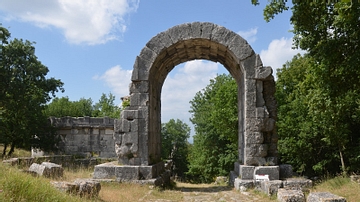
Visitor’s Guide to Carsulae (San Damiano)
Carsulae in Umbria, central Italy, was founded c. 300 BCE and only became a prosperous urban centre after it was connected by the Via Flaminia towards the end of the 3rd century BCE. It was granted the status of municipium and acquired a...

Definition
Women's March on Versailles
The Women's March on Versailles, also known as the October March or the October Days, was a defining moment in the early months of the French Revolution (1789-1799). On 5 October 1789, crowds of Parisian market women marched on Versailles...
