
Search
Did you mean: Tomb?
Remove Ads
Advertisement
Search Results

Article
The Wars of the Roses: Consequences & Effects
The Wars of the Roses (1455-1487 CE) was a dynastic conflict where the nobility and monarchs of England intermittently battled for supremacy over a period of four decades. Besides the obvious consequences...
Article
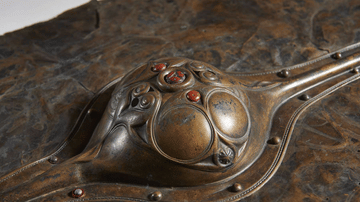
Celtic Bronze Shields
The ancient Celts produced magnificent bronze shields in Iron Age Britain which were most likely for ceremonial purposes and display. Several fine examples have miraculously survived as evidence of the imagination, skill...

Article
Viking Hygiene, Clothing, & Jewelry
Although the Vikings are routinely depicted as rough, grimy, and violent, they were actually quite refined, took personal hygiene seriously, and wore fine clothes ornamented by jewelry. Some Christian chroniclers...

Article
Sailing on Lake Nasser towards Abu Simbel
In ancient times, the First Cataract at Aswan marked the southern frontier of Egypt. Beyond lay the land of Nubia, which stretched along the river Nile from the First Cataract southwards for about 250 kilometres...

Article
A Visual Glossary of Greek Pottery
Alabastron (pl. alabastra) - a small jar for storing perfumes, named after the material (alabaster) the first examples were made from. They were often carried by a string looped around the neck of the vessel. Amphora...

Article
Diodorus Siculus' Account of the Life of Semiramis
Semiramis is the semi-divine Warrior-Queen of Assyria, whose reign is most clearly documented by the Greek historian Diodorus Siculus (l. 90-30 BCE) in his great work Bibliotheca Historica ("Historical...

Article
Herodotus on Cats in Egypt
The Greek historian Herodotus provides an accurate description of the devotion of the ancient Egyptians to cats in Book II of his Histories, but this passage is often cited out of context. Chapters II.66-67 are frequently...
Article
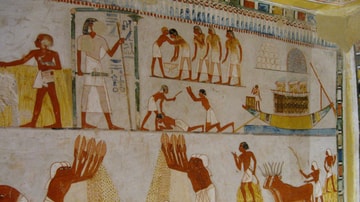
Social Structure in Ancient Egypt
The society of ancient Egypt was strictly divided into a hierarchy with the king at the top and then his vizier, the members of his court, priests and scribes, regional governors (eventually called 'nomarchs'), the...

Article
Ten Ancient Egypt Facts You Need to Know - Fun Trivia About Ancient Egypt
Ancient Egypt is defined as the civilization that flourished in North Africa between circa 6000 and 30 BCE – from the Predynastic Period in Egypt (circa 6000 to circa 3150 BCE) through...
Article
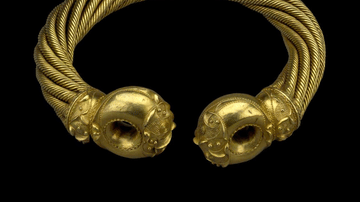
Ancient Celtic Torcs
In ancient Celtic cultures, torcs were a common form of jewellery and were made from bronze, copper, silver, and gold. Torcs were not just exquisite works of Celtic art but also identified the wearer’s status and perhaps were...
