
Search
Remove Ads
Advertisement
Search Results

Article
The Eleusinian Mysteries: The Rites of Demeter
The Rites of Eleusis, or the Eleusinian Mysteries, were the secret rituals of the mystery school of Eleusis and were observed regularly from c. 1600 BCE - 392 CE. Exactly what this mystic ritual was no...
Article
The Hippodrome of Constantinople
The Hippodrome of Constantinople was an arena used for chariot racing throughout the Byzantine period. First built during the reign of Roman emperor Septimius Severus in the early 3rd century CE, the structure was...

Article
Pliny the Younger on Christianity
Pliny the Younger's (61-112 CE) letter (Epistulae X.96) to Roman Emperor Trajan (r. 98-117 CE) is one of our earliest sources on Christianity from an outsider's point of view. It highlights the Christian movement's...

Article
Ancient Cyprus: A Travel Guide
Lying at the crossroads of the eastern Mediterranean, the island of Cyprus has long been a meeting point for many of the world's great civilizations. Situated where Europe, Asia and Africa meet, its location shaped...
Article
The Archaeological Excavations at Magdala
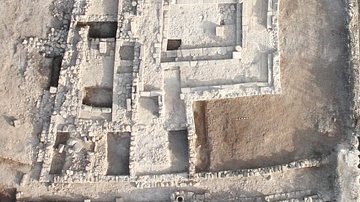
Magdala, known as Migdal in Hebrew (מִגְדָּל: tower) and also as Taricheae (Ταριχέα, from the Greek Τάριχος or tarichos: preserved by salting or drying fish), was an important fishing town during the first...
Article
Illyria - Exploring Ancient Albania
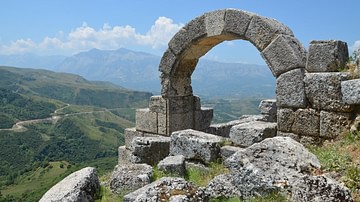
Albania is located at the crossroads of the eastern Adriatic and was known as Illyria and Epirus throughout the Classical era. It played a strategic role in ancient times and was a point of contact between Illyrian...

Article
The Battle of the Catalaunian Fields
The Battle of the Catalaunian Fields (also known as The Battle of Chalons, The Battle of Maurica) was one of the most decisive military engagements in history between the forces of the Roman Empire under Flavius...

Article
Legions of Late Antiquity
The Roman army underwent dramatic changes in Late Antiquity. Civil war and external conflicts led to the creation of new legions while existing legions were either split or disbanded. Although there was an increase in...

Article
Pherenike the Female Olympic Trainer
Pherenike (l. c. 388 BCE, also known as Kallipateira) was an athlete from Rhodes who, because she was a woman, could not compete in the Olympic Games and, as a married woman, was not allowed to even watch them...

Article
Rome's Egyptian Heritage
The Eternal City of Rome is one of the places in the world with the most historical sites to visit. The list of ancient ruins, museums, churches, and other historical landmarks makes the city an Eldorado for anyone interested...
