
Search
Remove Ads
Advertisement
Search Results

Article
Hymn to Nisaba - A Praise Song for the Sumerian Goddess of Writing
The Hymn to Nisaba (circa 3rd millennium BCE) is a poem praising Nisaba, the Sumerian goddess of writing and accounts who also served as scribe of the gods. The poem is officially dedicated...

Article
A Praise Poem of Shulgi - A Celebration of an Ancient Famous Run
A Praise Poem of Shulgi (written circa 2020-2000 BCE) is an ancient Sumerian document celebrating the famous run of 200 miles (321.8 km) in one day made by the king Shulgi of Ur (reign 2094...
Article
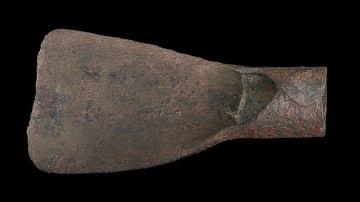
The Song of the Hoe - Praise for an Ancient Mesopotamian Farming Tool
The Song of the Hoe is a Sumerian praise poem celebrating the hoe for its many uses and linking it to the creation of the world by the great god Enlil. As the economy of Mesopotamia was...

Definition
Toltec Civilization
The Toltec civilization flourished in ancient central Mexico between the 10th and mid-12th centuries. Continuing the Mesoamerican heritage left to them by earlier cultures, the Toltecs built an impressive capital at Tollan...

Definition
Hundred Years' War
The Hundred Years' War (1337-1453) was an intermittent conflict between England and France lasting 116 years. It began principally because King Edward III (r. 1327-1377) and Philip VI (r. 1328-1350) escalated a dispute over...

Definition
Franks
The Franks were a Germanic people who originated along the lower Rhine River. They moved into Gaul during the Migration Age, where they established one of the largest and most powerful kingdoms in Europe after the fall of the Western...

Definition
Ur-Nammu - Founder of the Sumerian Renaissance
Ur-Nammu (circa 2112-2094 BCE) was the founder of the Third Dynasty of Ur in Sumer, who initiated the so-called Ur III period (circa 2112 to circa 2004 BCE), also known as the Sumerian Renaissance. He is...

Definition
Amaterasu - Shinto's Greatest Goddess
Amaterasu Omikami ('the Great Divinity Illuminating Heaven') is the sun goddess and most important deity of the Shinto religion. Amaterasu is the ruler of Takama no Hara (the High Celestial Plain), the domain of...
Definition
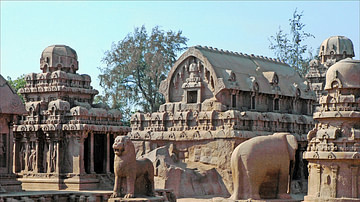
Mahabalipuram
Mahabalipuram or Mamallapuram is a historic city and UNESCO World Heritage site in Tamil Nadu, India. During the reign of the Pallava dynasty, between the 3rd century CE and 7th century CE, it became an important centre of art...

Definition
Mithridates VI
Mithridates VI (120-63 BCE, also known as Mithradates, Mithradates Eupator Dionysius, Mithridates the Great) was the king of Pontus (modern-day northeastern Turkey) who was regarded by his people as their savior from the oppression...
