
Search
Remove Ads
Advertisement
Search Results

Definition
Tibetan Book of the Dead
The Tibetan Book of the Dead is the English translation of the Tibetan texts known as bar-do thos-grol (Bardo Thodol) – “Liberation Through Hearing During the Intermediate State” – and serves as a guide for the soul of the deceased after...

Article
Old Testament Pseudepigrapha
The Old Testament Pseudepigrapha are the non-canonical writings of Judaism and Christianity, ranging from the 5th century BCE to the 9th century CE. Pseudepigrapha comes from a Greek noun denoting writings with a false superscription or name...
Definition
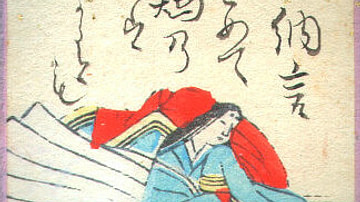
The Pillow Book
The Pillow Book (Makura no Soshi) is a personalised account of life at the Japanese court by Sei Shonagon which she completed c. 1002 CE during the Heian Period. The book is full of humorous observations (okashi) written in the style of a...

Definition
Book of Revelation
The book of Revelation or the Apocalypse of John of Patmos is one of the most famous books in the New Testament. Written near the end of the 1st century CE, it is the only apokalypsis (Greek: "unveiling of unseen realities") that was included...

Definition
Book of the Heavenly Cow
The Book of the Heavenly Cow is an ancient Egyptian text dealing with the rebellion of humanity against the sun god Ra, his destruction of the rebels through the goddess Hathor, the reversal of this decision and Ra's mercy, and his ascent...

Definition
Book of Genesis
The Book of Genesis is the first book of the Jewish scriptures and the Old Testament of the Christian Bible. Genesis takes its name from the opening line in Hebrew – beresit, ("in the beginning") – later translated into Greek as genesis ("origin"...

Definition
Book of Job
The book of Job in the Hebrew Bible is found among the books designated Ketuvim ("writings"), along with Ecclesiastes and the Book of Proverbs. All three belong to a genre known as wisdom literature. The books share a common ancient cultural...

Article
Chaucer's The Book of the Duchess Full Text & Summary
The Book of the Duchess is the first major work of the English poet Geoffrey Chaucer (l. c. 1343-1400 CE), best known for his masterpiece The Canterbury Tales, composed in the last twelve years of his life and left unfinished at his death...

Interview
Interview: Early Medieval Irish Book Art
Early medieval Irish book art is both beautiful and fascinating. It reflects a flourishing monastic culture which played a key role in the cultural development of Europe from the 6th to 9th centuries. Nowhere is this more clearly illustrated...

Article
Grief & Consolation in Chaucer's Book of the Duchess
In Geoffrey Chaucer's first major work, The Book of the Duchess (c. 1370 CE), two genres of medieval literature are combined – the French poetic convention of courtly love and the high medieval dream vision – to create a poem of enduring...
