
Search
Remove Ads
Advertisement
Search Results

Image
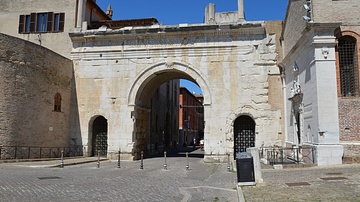
Arch of Augustus, Aosta
The Triumphal Arch known as the Arch of Augustus in Aosta, northern Italy. The arch was erected in the reign of Augustus in 25 BCE to honour the emperor and his victory over the Salssi. The central iron crucifix and roof...
Image
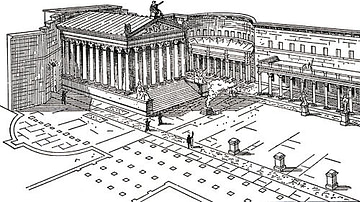
Arch of Augustus in Fano
The Arch of Augustus in Fano (Italy) is a city gate in the form of a triumphal arch with three vaults that served as the entrance to the city of Colonia Julia Fanestris by the via Flaminia (modern-day Fano). The monument...
Image
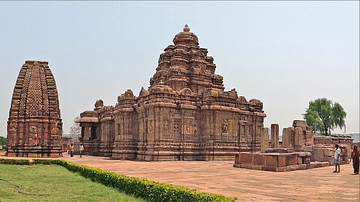
Forum of Augustus, Rome
A reconstruction of the Forum of Augustus in Rome with the temple of Mars Ultor, late 1st century BCE.
Article
The Temples of Pattadakal
The history of Pattadakal goes back to a time when it was called Kisuvolal, a valley of red soil. It even found a mention in Ptolemy's Geography in the 2nd century CE. Presently Pattadakal is located in the district of...

Image
Augustus as Pontifex Maximus (Detail)
Marble statue of Emperor Augustus (27 BC-34 CE) dressed in his role as the high priest Pontifex Maximus, Corinth Archeological Museum.

Image
Equestrian statue of Augustus
Bronze torso from an equestrian statue of Augustus dating from the end of the 1st century BCE. The statue was found in the sea between Euboia and Agios Eustratios. (National Archaeological Museum of Athens)

Image
Augustus as pontifex maximus
Marble statue of Augustus as Pontifex Maximus, late Augustan period. (Palazzo Massimo alle Terme, Rome)
Image
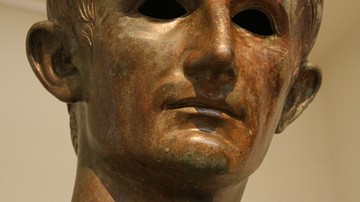
Augustus, Bronze Head from Euboea
A detail of the bronze statue of Roman emperor Augustus found in the sea near Euboea, 12-10 BCE (National Archaeological Museum, Athens)
Image
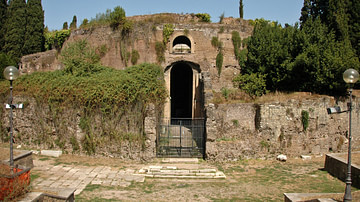
Doorway, Mausoleum of Augustus
The Mausoleum of Roman emperor Augustus in Rome. Completed in 28 BCE and, reaching a height of almost 45 metres and a diameter of 90 metres, it would hold the record as the largest tomb in the Roman world.

Image
Bust of the Emperor Augustus
The facial features and the scalp hair reflect the typical characteristics of the Roman Emperor Augustus (Octavianus). Marble. Roman Period, 27 BCE to 14 CE. From Pergamon, Bergama, in modern-day Turkey. (Museum of Archaeology...
