
Search
Did you mean: Selene?
Remove Ads
Advertisement
Search Results
Article
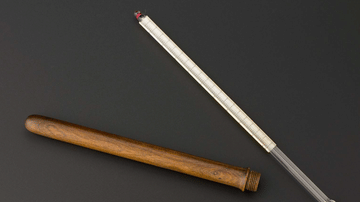
The Thermometer & the Scientific Revolution
The thermometer was invented in the mid-17th century during the Scientific Revolution when scientists began to search for an accurate instrument to measure a wide range of temperatures using a scale that...
Article
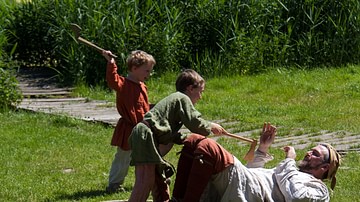
Childhood in the Viking Age
Childhood in the Viking Age (c. 750-1100) was largely undocumented as historical records primarily focus on adults, particularly men. Likewise, little is known about children's presence in the afterlife, as no runestones...
Article
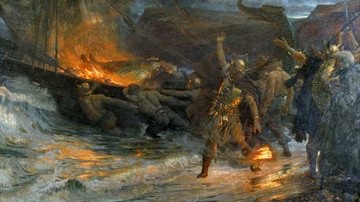
Norse Ghosts & Funerary Rites
In Norse belief, the soul of the deceased might wind up in any one of a number of afterlife realms. There was Valhalla, the realm of Odin where the dead warriors drank, fought, and told stories, Folkvangr ('the Field...

Article
Vikings: Jewelry, Weapons & Social Change at The VIKINGR Exhibition
In April 2019, The Museum of Cultural History in Oslo, Norway, opened its doors to the new exhibition VÍKINGR, containing rich treasures and unique archaeological finds from the Viking...

Article
The Sun & the Moon in Norse Myth
In Norse mythology, the Sun and the Moon appear as personified siblings pulling the heavenly bodies and chased by wolves, or as plain objects. Written sources, such as the Poetic Edda and the Prose Edda, have surprisingly...

Article
Battle of Leipzig
The Battle of Leipzig (16-19 October 1813), or the Battle of the Nations, was the largest battle of the Napoleonic Wars (1803-1815), featuring over half a million soldiers and resulting in over 100,000 total casualties. The climax...

Article
Viking Prophecy: The Poem Völuspá of the Poetic Edda
The Völuspá (Old Norse: Vǫluspá) is a medieval poem of the Poetic Edda that describes how the world might have come into shape and would end according to Norse mythology. The story of about 60 stanzas...

Article
A History of Svalbard
Svalbard is an archipelago in the Arctic Ocean on the northwest corner of the Barents Shelf. It is 800 kilometres (497 mi) north of mainland Norway and sits roughly midway between the top of Norway and the North Pole. It is...

Article
Women Scientists in the Scientific Revolution
Women scientists during the Scientific Revolution (1500-1700) were few in number because male-dominated educational institutions, as well as scientific societies and academies, barred women entry, meaning...

Article
Olaudah Equiano's Account of the Middle Passage
Olaudah Equiano (l. c. 1745-1797, also known as Gustavus Vassa) was an African of the Igbo village of Essaka, of the Kingdom of Benin (modern Nigeria), who was enslaved around the age of ten, bought his...
