
Search
Remove Ads
Advertisement
Search Results
Image
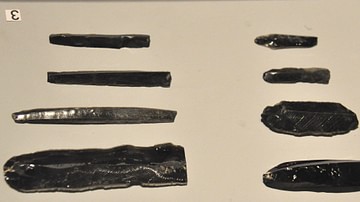
Obsidian Tools
These tool were probably used for cutting and chopping. Obsidian is a naturally occurring volcanic glass and is not local to Mesopotamia. It was most likely imported from modern Afghanistan. These tools were found at Tell Shemshara (modern...
Image
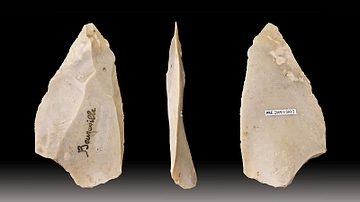
Neanderthal Tools - Levallois Point
A Levallois point flint tool from the Mousterian lithic industry, made by Neanderthals. It was discovered in Beuzeville, France and is on display at the museum of Toulouse, France.

Image
Samoan Tattooist Using Traditional Tools
A Samoan tattooist using the traditional tools to place a tatau (tattoo) on a man's back. The methods and tools were also used in New Zealand by the Maori. This photograph was taken c. 1895 CE by Thomas Andrew (1855-1939 CE).
Image
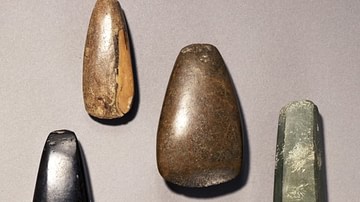
Jomon tools
Group of polished stone tools from the Jomon Period.

Image
Obsidian used for Prehistoric Japanese Tools
This piece of obsidian dates from the Paleolithic period or c. 18000 BCE, and it was uncovered in Engarau-cho on Japan's Hokkaido island. It helped prehistoric Japanese people in making stone tools. (Tokyo National Museum)
Image
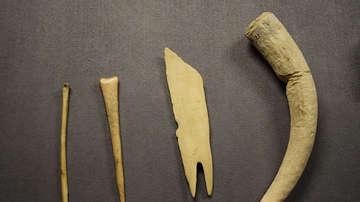
Eneolithic Tools from Armenia
These Eneolithic tools are made of stone or bone. They come from what is present-day Armenia, and they date from the 5th-4th century BCE. (Metsamor Historical-Archaeological Museum-Reserve, Taronik, Armenia)

Article
Prehistoric Alpine Stilt Houses
Alpine stilt houses are a unique and fascinating aspect of prehistoric architecture in the Alps, which provide valuable insights into the lives and culture of the ancient communities. The houses were built by prehistoric communities living...
Image
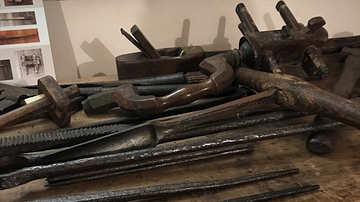
Hand Tools
Hand and blacksmith tools on display at Te Waimate Mission, Bay of Islands, New Zealand. The mission house was constructed in 1832 CE. This photo was taken in November 2019.
Image
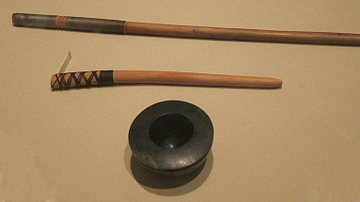
Traditional Pacific Island Tattoo Tools
Instruments for traditional Pacific Island tattoos: hāhau (tapping stick) made of ulei wood, moli (tattoo tool) made of wood and bone, and apu paʻu (ink bowl), made of jade. Date unknown.

Definition
Koh-i-Noor
The Koh-i-Noor diamond (also Koh-i-Nur or Kūh-e Nūr) is one of the largest and most famous cut diamonds in the world. It was most likely found in southern India between 1100 and 1300. The name of the stone is Persian meaning ‘Mountain of...
