
Search
Remove Ads
Advertisement
Search Results

Article
The Hellenistic World: The World of Alexander the Great
The Hellenistic World (from the Greek word Hellas for Greece) is the known world after the conquests of Alexander the Great and corresponds roughly with the Hellenistic Period of ancient Greece...

Article
Zengids & the Crusaders: Race for Egypt (1163-1169 CE)
In the aftermath of the failure of the Second Crusade (1147-1149 CE), which only managed to bring Damascus under Nur ad-Din's (sometimes also given as Nur al-Din, l. 1118-1174 CE) dominion, Egypt...
Definition
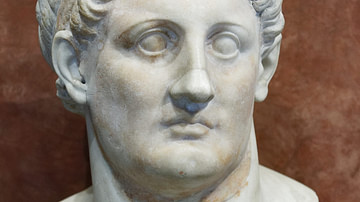
Ptolemy I
Ptolemy I Soter (366-282 BCE) was one of the successor kings to the empire of Alexander the Great. He served not only as king of Egypt but also the founder of the Ptolemaic Dynasty, a dynasty which included the infamous Cleopatra VII...
Definition
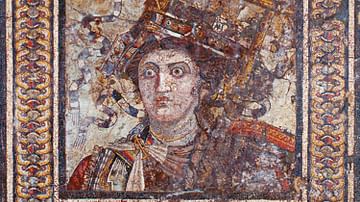
Berenice II Euergetis
Berenice II Euergetis (c. 267-221 BCE) was a pre-eminent Hellenistic queen, who ruled together with her husband Ptolemy III (r. 246-221 BCE), when the Ptolemaic kingdom was at the height of its power, dominating most of the...

Definition
Pergamon
Pergamon (also Pergamum) was a major intellectual and cultural center in Mysia (northwest Asia Minor, modern-day Turkey) which flourished under the Attalid Dynasty (281-133 BCE) during the Hellenistic Period. It was the capital of the...

Definition
Berenike IV
Berenike IV (r. 58-55 BCE) was queen of Ptolemaic Egypt and the older sister of Cleopatra VII (r. 51-30 BCE). She ruled briefly after her father Ptolemy XII was overthrown by a popular rebellion. Berenike IV's reign ended in 55 BCE...

Article
Caesarea Maritima's Role in the Mediterranean Trade
Caesarea Maritima was located on the eastern coast of the Mediterranean Sea. Built from the ground up in 22-10 BCE by Rome's client king, Herod the Great (r. 37-4 BCE), its location in relation to ship...
Article
The Eastern Trade Network of Ancient Rome
The life of wealthy Romans was filled with exotic luxuries such as cinnamon, myrrh, pepper, or silk acquired through long-distance international trade. Goods from the Far East arrived in Rome through two corridors...

Definition
Fayum
The Faiyum (also given as Fayoum, Fayum, and Faiyum Oasis) was a region of ancient Egypt known for its fertility and the abundance of plant and animal life. Located 62 miles (100 kilometers) south of Memphis (modern Cairo), the Faiyum...

Definition
Ibn Battuta
Ibn Battuta (l. 1304-1368/69) was a Moroccan explorer from Tangier whose expeditions took him further than any other traveler of his time and resulted in his famous work, The Rihla of Ibn Battuta. Scholar Douglas Bullis notes that...
