
Search
Remove Ads
Advertisement
Search Results
Article
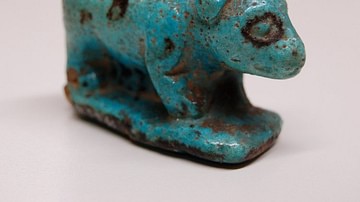
Dogs in Ancient Egypt
The dog as "man's best friend" has a long history going back to the ages long before the civilization of ancient Egypt was established but the Egyptians were among the earliest people to recognize the value of the dog and...

Article
Ancient Egyptian Taxes & the Cattle Count
The gods of ancient Egypt freely gave their bounty to the people who worked the land, but this did not exempt those farmers from paying taxes on that bounty to the government. Egypt was a cashless society until...

Article
Azulejos: The Visual Art of Portugal
Glazed blue ceramic tiles or azulejos are everywhere in Portugal. They decorate the winding streets of the capital, Lisbon. They cover the walls of train stations, restaurants, bars, public murals, and fountains...
Article
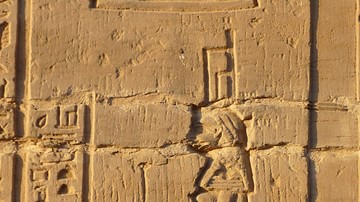
Egyptian Medical Treatments
The ancient Egyptians experienced the same wide array of disease that people do in the present day, but unlike most people in the modern era, they attributed the experience to supernatural causes. The common cold, for...
Article
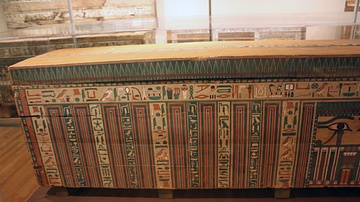
The Coffin Texts
The Coffin Texts (c. 2134-2040 BCE) are 1,185 spells, incantations, and other forms of religious writing inscribed on coffins to help the deceased navigate the afterlife. They include the text known as the Book of Two Ways which...
Article
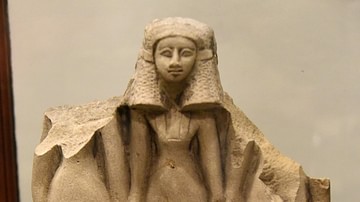
Female Physicians in Ancient Egypt
A famous story from Greece relates how a young woman named Agnodice wished to become a doctor in Athens but found this forbidden. In fact, a woman practicing medicine in Athens in the 4th century BCE faced the death...

Article
Festivals in Ancient Egypt
The gods of the ancient Egyptians were always apparent to the people through natural events. The sunrise was Ra emerging from the underworld in his great ship, for example, and the moon was the god Khonsu traveling across...
Article
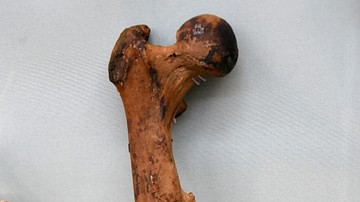
Ancient Egyptian Medicine: Study & Practice
In Europe, in the 19th century CE, an interesting device began appearing in graveyards and cemeteries: the mortsafe. This was an iron cage erected over a grave to keep the body of the deceased safe from 'resurrectionists'...

Image
The Seated Scribe
The Seated Scribe, from Saqqara, 4th or 5th Dynasty, Old Kingdom of Egypt, c. 2600 - 2350 BCE.
Louvre, Paris.

Image
Imhotep
Bronze figure of Imhotep, the architect of Djoser's Step Pyramid at Saqqara, represented as a seated scribe, dating from the Late Period of Ancient Egypt when Imhotep was deified some 2,000 years after his death. British Museum, London...
